Metro Manila, Philippines
DPWH Develops Connector Road to Solve Extreme Traffic Congestion in Manila and Reduce Carbon Emissions
Bentley Applications Established Digital Workflows for Greater Effciency and Improved Visualization
Department of Public Works and Highways (DPWH)
Travel Slowed To A Crawl
The metropolitan area of Manila in the Philippines is considered one of the most densely populated metros in the world, with over 13 million inhabitants sharing an area of less than 620 square kilometers. According to Tomtom, a Dutch navigation and traffic data company, Metro Manila commuters lose a cumulative 117 hours—almost five days— in traffic every year, with average speeds during rush hour dropping to only 19 kilometers per hour. The country’s Department of Public Works and Highways (DPWH) sought to ease the traffic jams by connecting existing road networks with new high-speed expressways.
That desire for connecting roads grew into the NLEX-SLEX Connector Road Project. It consists of eight kilometers of all-elevated, high-speed, limited-access expressway connecting the North Luzon Expressway (NLEX), a major expressway connecting Metro Manila to the north, with South Luzon Expressway (SLEX), which serves as the major corridor to the south. The road will also connect with España Boulevard, a national highway serving the University Belt and business district in Manila. “The NLEX-SLEX Connector Road then serves as both a substantial alternative connection between the country’s north and south of Luzon, bypassing the Metro Manila center, while allowing free movement of goods and services in-between where 36% of the Philippines’s economy flows through,” said David Galang, division chief, project implementation supervision division at DPWH.
Seeking A Digital Walkthrough
In addition to alleviating traffic congestion, the NLEX-SLEX Connector Road needed to provide trucks with alternative routes 24/7, as well as improve connectivity between ports and airports. The project was particularly important for the city, as it is only the second major expressway in Metro Manila. “It is estimated that an estimated PHP 3.5 billion daily economic loss is being incurred continuously due to the severeness of traffic congestion in Metro Manila, and any solutions contributing to the problem have tremendous impact on the country’s economy,” said Galang.
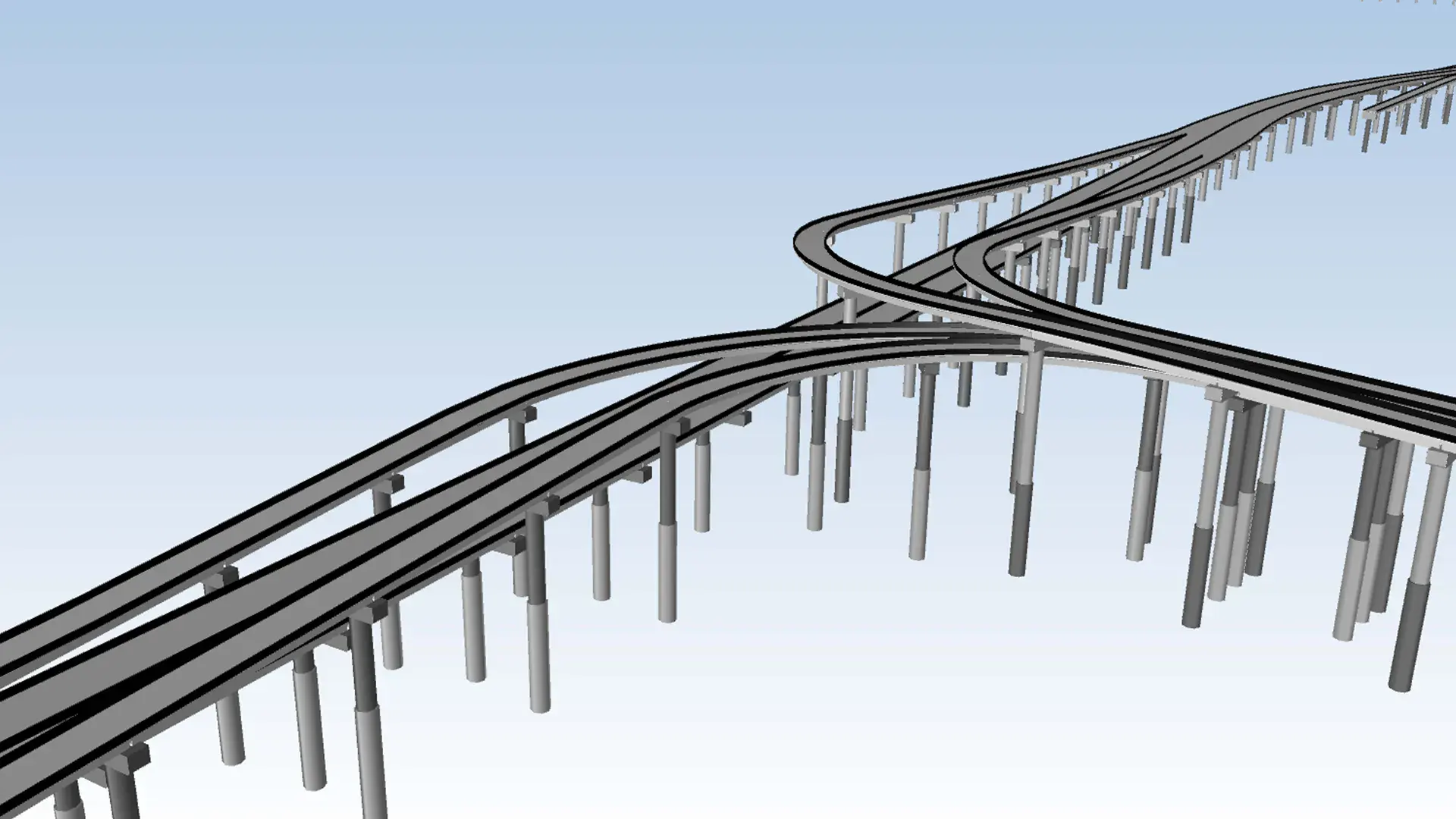
To help them develop a roadway that effectively met the needs of the area, DPWH sought digital twin technology, as the immersive visualization could serve as an additional assessment of the NLEX-SLEX Connector Road Project’s viability, construction progress, real-time monitoring, and impact to the public. Additionally, they wanted to incorporate some unusual construction methods, such as the Sosrobahu technique for casting and positioning beams and girders in limited horizontal space, and a Super T-girder design instead of the AASHTO girder design common in the Philippines. Ideally, their solution would support image capture, modeling, visualization, and construction
Key Takeaways
- The NLEX-SLEX Connector Road alleviated congestion in an area representing 36% of Manila’s economy.
- DPWH needed to establish digital workflows and incorporate unusual building techniques.The organization used Bentley applications to create a digital twin of the project as well as a mixed reality experience to share their vision of the project.
- DPWH estimates digital workflows increased project productivity by 15% and improved equipment logistics by 40%.
- The road is expected to eliminate 315 million kilograms of carbon emissions over the next 30 years.
Project Playbook

Combining Solutions Into One Platform
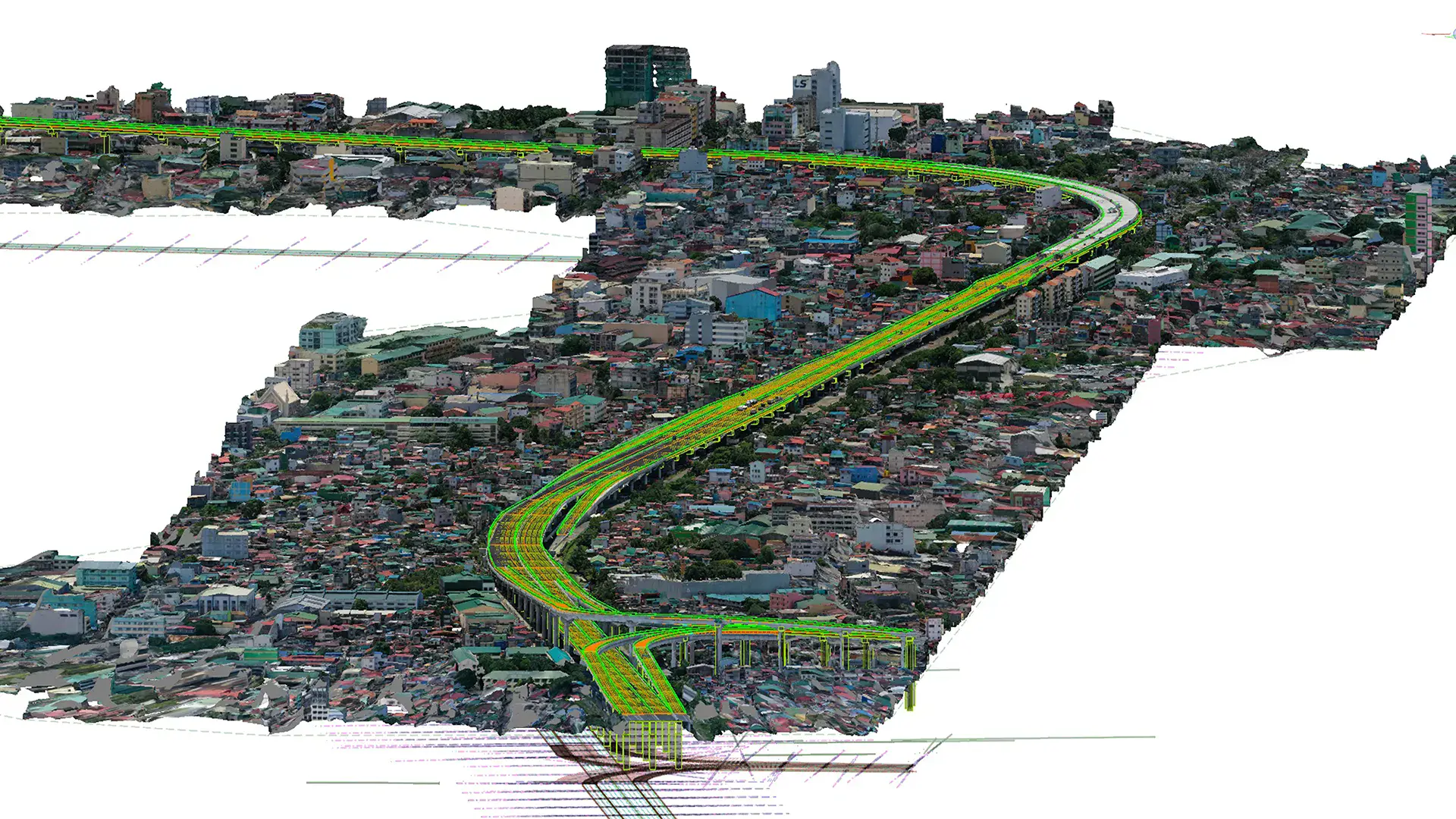
By 2022, DPWH determined Bentley applications could support them at every stage of the project. They began by using iTwin Capture to process imagery of the work site into a reality mesh. Next, they modeled all aspects of the project with MicroStation®, OpenRoads Designer, and OpenBridge Designer. With SYNCHRO, DPWH created a detailed 4D construction simulation, helping them to determine how to build in the tight urban environment and how to effectively build using unfamiliar techniques.
With the digital twin completed, DPWH used Bentley LumenRT and the iTwin Platform to create a mixed reality experience that went beyond pre-recorded animations and flythroughs. “Since 2019, the DPWH had been looking into procuring a mixed reality solution to implement digital twin technology, aiming to augment its current engineering practices and workflows to provide a platform where users can manipulate, walk and steer through BIM to serve as an additional assessment of the NLEX-SLEX Connector Road project’s viability, construction progress, real-time monitoring, and the project’s impact to the public,” said Galang.
Insights Into Productivity
Transitioning to a digital workflow and visualizing both the finished project and the construction process greatly improved development at every step of the project. “DPWH was able to experience promising benefits such as streamlining the workflow from site survey to finished models, reduction of errors on-site, impressive project visualizations, better project documentation, and overall revolutionize the holistic engineering work for infrastructure projects,” said Galang. The organization estimates the process increased project productivity by 15% and improved equipment logistics by 40%.
The NLEX-SLEX Connector Road was completed on schedule in late 2023, significantly reducing travel times in the economic heart of Manila—in some cases lowering travel time by more than half. Estimates indicate the road directly contributed to the creation of 3,000 jobs, and benefits transportation companies by cutting travel time, reducing work hours, and saving fuel costs. Additionally, the road is expected to eliminate 315 million kilograms of carbon emissions over the next 30 years.