With global infrastructure accounting for nearly 70% of emissions, operational efficiency became central to sustainable growth in 2024.
2024 TREND
Delivering operational efficiencies
Universities, utilities, and industry: Operational efficiency at scale in 2024
With global infrastructure accounting for nearly 70% of emissions, operational efficiency became central to sustainable growth in 2024. Universities, utilities, and industries proved that efficiency powered by digital twins is the most scalable form of climate action.
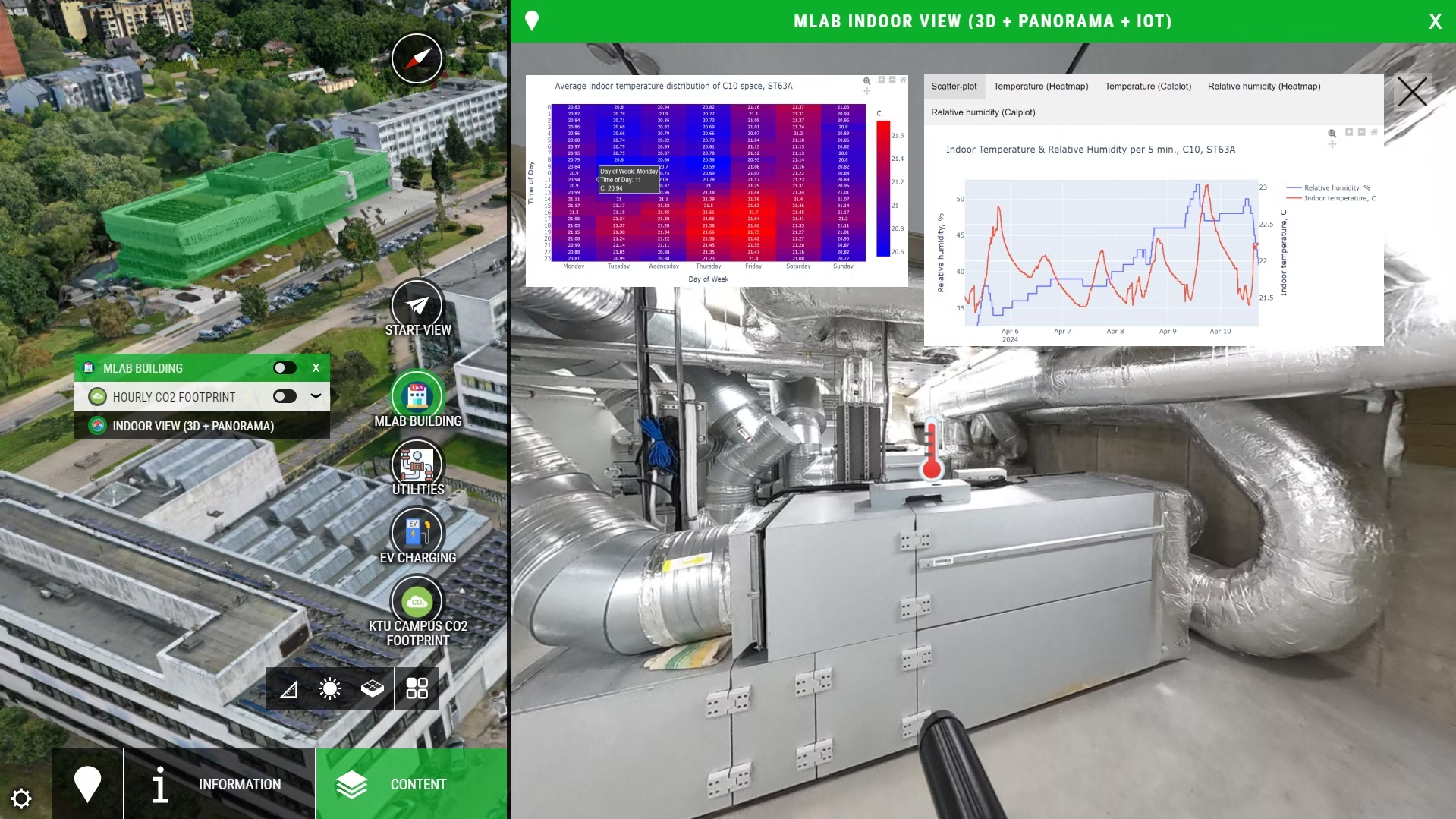
The Kaunas University of Technology campus digital twin exemplified this shift, integrating over 2,000 real-time data points to cut operational carbon, manage energy demand, and foster a green-conscious campus community.
In Brazil, Sabesp’s INTEGRA 4.0 program transformed one of the world’s largest water utilities with AI, IoT, and digital twins. By cutting leaks, optimizing pumping, and reducing CO₂ emissions, it turned São Paulo’s water system into a benchmark of smart, resource-efficient urban management.
Meanwhile, in China, the hydrogen metallurgy demonstration project by CERI showcased how digital engineering drives operational change in heavy industry. By switching steelmaking from coal to hydrogen-rich gas and using digital twins for real-time oversight, the plant reduced CO₂ by 70%—800,000 tons annually—while halving structural material needs.
These initiatives highlight how operational intelligence isn’t just about cost savings: it’s a pathway to decarbonization, resilience, and competitiveness.
Universities, utilities, and industry: Operational efficiency at scale in 2024
With global infrastructure accounting for nearly 70% of emissions, operational efficiency became central to sustainable growth in 2024. Universities, utilities, and industries proved that efficiency powered by digital twins is the most scalable form of climate action.
The Kaunas University of Technology campus digital twin exemplified this shift, integrating over 2,000 real-time data points to cut operational carbon, manage energy demand, and foster a green-conscious campus community.
In Brazil, Sabesp’s INTEGRA 4.0 program transformed one of the world’s largest water utilities with AI, IoT, and digital twins. By cutting leaks, optimizing pumping, and reducing CO₂ emissions, it turned São Paulo’s water system into a benchmark of smart, resource-efficient urban management.
Meanwhile, in China, the hydrogen metallurgy demonstration project by CERI showcased how digital engineering drives operational change in heavy industry. By switching steelmaking from coal to hydrogen-rich gas and using digital twins for real-time oversight, the plant reduced CO₂ by 70%—800,000 tons annually—while halving structural material needs.
These initiatives highlight how operational intelligence isn’t just about cost savings: it’s a pathway to decarbonization, resilience, and competitiveness.