


Power Line Systems
The industry standard in overhead line design
Design, analyze, and manage transmission, distribution, and communication lines and their structures.
Powerful overhead line design and analysis software
Power Line Systems (PLS) offers solutions to achieve accurate, compliant, and cost-effective overhead line designs.
PLS-CADD
Computer Aided Design and Drafting ❯
Optimize the design of overhead lines in a fully integrated 3D environment that incorporates terrain modeling, engineering, spotting, and drafting functions.

PLS-GRID
Enterprise level PLS project manager and map viewer ❯
Manage your overhead line data in a single location and access PLS projects on desktop or web for easy distribution to all departments and contractors.

TOWER
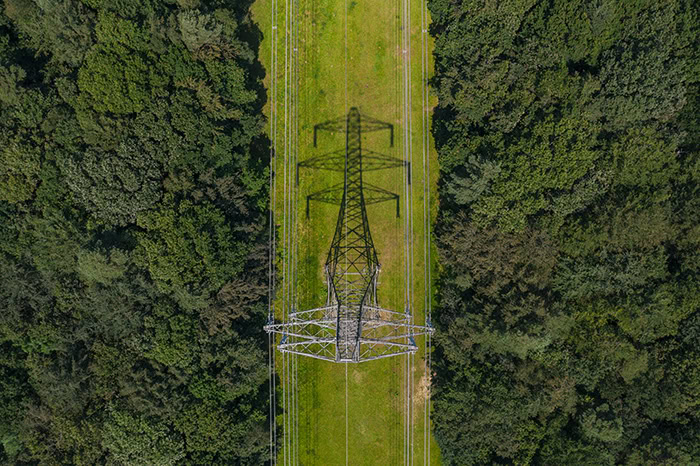
Tower structure analysis and design ❯
Analyze and design steel lattice transmission, substation, and communication tower structures, including self-supporting and guyed.
PLS-POLE
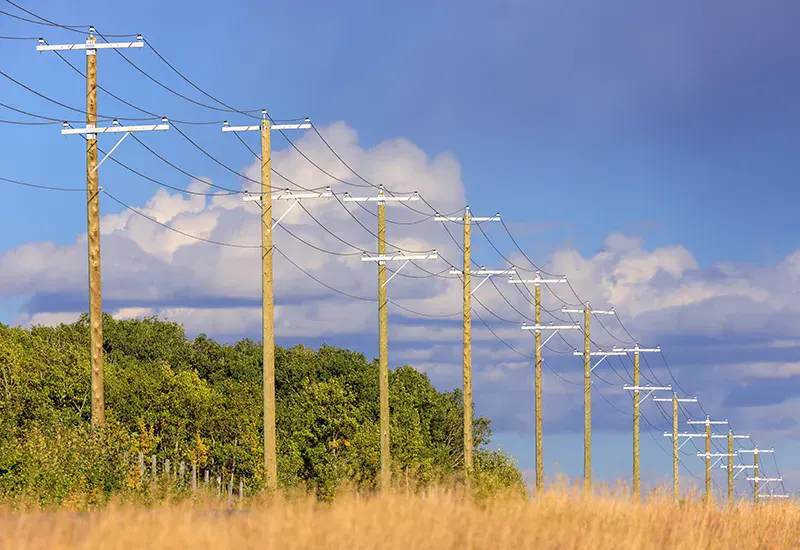
Pole structure analysis and design ❯
Analyze and design structures made up of wood, laminated wood, steel, concrete and Fiber Reinforced Polymer (FRP) poles or modular aluminum masts.

SAPS
Structural analysis of power and communication systems ❯
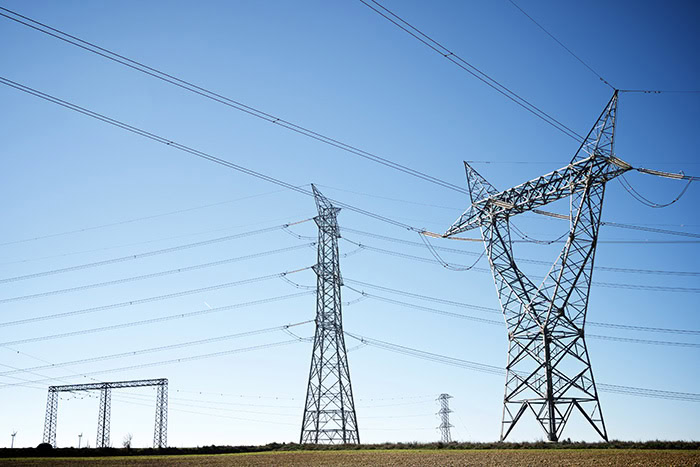
Simulate how overhead lines and their supporting structures behave under real-world conditions with 3D finite element modeling and linear and nonlinear analysis capabilities.
PLS-CADD/LITE
Simplified edition of PLS-CADD ❯
CAISSON
Analysis and design of reinforced concrete pier foundations ❯
Analyze and design concrete pier foundations and direct embedment depths for poles, while instantly visualizing how changes in materials or design parameters influence performance.
Why do our users trust our products?
For over 40 years, PLS has been at the forefront of overhead line design, delivering a suite of advanced software tools that have become the global industry standard.
Relied upon by over 1,600 organizations in more than 125 countries, its software offers comprehensive capabilities for designing, analyzing, and maintaining overhead power line infrastructure. From thermal ratings to full digital twins of entire grids, users gain deeper insight into real-world performance, enabling safer, smarter, and more efficient decisions.
Success Stories
Hear from our users
Exo Inc.
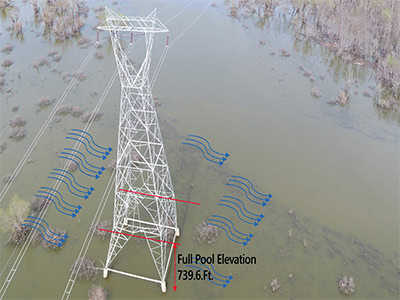
Grid tower stabilization solution prevents
catastrophic power outage
Exo leverages digital twin technology to remediate structure and prevent power loss during a global pandemic for energy utility, Evergy.

Toth & Associates
Transmission line project restores power to 1,500 people 18 days ahead of schedule
Toth & Associates, an engineering firm, develops electrical line replacement plans for Prairie Power, a generation and transmission cooperative.
Get started with Power Line Systems today!

PLS-CADD
Computer Aided Design and Drafting
PLS-CADD is the most powerful overhead power line design program on the market. PLS-CADD runs under Microsoft Windows and features an easy-to-use graphical user interface. It integrates all aspects of line design into a single stand-alone program with a simple, logical, consistent interface. No other program can match the sophisticated engineering capabilities available in PLS-CADD. This sophistication and integration leads to more cost-effective designs being produced in only a fraction of the time required by traditional methods. The PLS-CADD solution is so clearly superior to any alternative that it has been adopted by more than 1600 organizations in over 125 countries.
PLS-CADD capabilities include:
- 3D engineering model
- Terrain model
- Engineering standards & calculations
- Advanced sag-tension
- Structure modeling
- Materials subsystem
- Drafting
PLS-GRID
Enterprise level PLS project manager and map viewer
Leverage your decades of overhead line models built in PLS-CADD, PLS-CADD/Lite, PLS-POLE, and TOWER to create your own PLS-GRID. Serving as a true engineering-grade digital twin of your grid, it allows access to accurate structure usage, line clearances, vegetation clearances, thermal line ratings, plan and profile sheets, sag tension reports, staking data, construction documents etc. on your desktop as well as on the web. PLS-GRID manages all your overhead line data in a single location for easily distribution to all departments and contractors.
The PLS-GRID system comprises three primary components:
- PLS-GRID Server – 100% built on Web Services that enable fast, simple, and reliable integration with your systems. PLS-GRID keeps your data under your control on your servers in your data center “where it belongs.”
- PLS-GRID Desktop – Automatically finds and indexes all the PLS projects on your network and shows the PLS-CADD and PLS-CADD/Lite projects on a map that allows for graphical interaction to open not only entire projects but individual structure models for edit and review.
- PLS-GRID Web – Shows projects on a map, with details about each structure and circuit directly inside a web browser with cross-platform, multi-device support. PLS-GRID Web provides access to the same reports as PLS-GRID Desktop and KMZ files for 3D visualization of your infrastructure on any computing device including mobile devices and tablets in the field.
PLS-TOWER
Analysis and design of steel latticed towers used in transmission and communication facilities
TOWER is a powerful and user-friendly Microsoft Windows program designed for analyzing and designing steel latticed towers used in electric power lines and communication facilities. It supports both self-supporting and guyed tower models, performs design checks under user-specified loads, and calculates maximum allowable wind and weight spans, including interaction diagrams for electric power structures. TOWER has evolved through continuous feedback from hundreds of utilities, fabricators, and consultants worldwide. It has refined its algorithms, interface, and design into a comprehensive tool known for its reliability and ease of use.
TOWER capabilities include:
- Structure modeling
- Finite element analysis
- Code checks
- Intuitive GUI
- Interoperability
SAPS
Structural analysis of power and communication systems
SAPS is a general structural analysis program that runs under Microsoft Windows. It can be used both as a stand-alone program and as a plug-in to supplement the sag-tension capabilities of our PLS-CADD program. Its primary intended uses are in the fields of transmission, substation and communication systems for which it has been found vastly superior to traditional nonlinear finite element programs both in performance and simplicity of use. Transmission, substation and communication systems often include cables in the form of conductors, ground wires, guys, suspension strings, etc. They can also include flexible bending elements which deflect significantly under design loads.
Typical applications of SAPS include:
- Providing the finite element engine for PLS-CADD integrated finite element sag-tension
- Self-supporting transmission, communication or substation structures – latticed or framed
- Guyed transmission structures (delta, V-, Y-, chainette, etc.)
- Flexible single or multiple pole structures (concrete, steel or wood poles, H-frames, etc.)
- Unbalanced line tension calculations (various wind, ice, temperature conditions)
- Effects on sags and tensions from slack changes due to splices, offset clipping, support movement
- Detailed analysis of flexible line segments (several structures interconnected by cables)
- Guyed microwave or TV towers, large antenna arrays
- Suspended structures (roofs, bridges, etc.)

PLS-POLE
Analysis and design of structures with wood, laminated wood, steel, concrete and FRP poles or modular aluminum masts
PLS-POLE is a powerful and intuitive Microsoft Windows program for analyzing and designing structures made of wood, laminated wood, steel, concrete, Fiber Reinforced Polymer (FRP) poles, or modular aluminum masts. It supports modeling of virtually any transmission, substation, or communications structure that includes poles, H-frames, A-Frames, and X-Frames built from components like arms, guys, braces, and insulators. The program performs design checks under user-specified loads and calculates maximum allowable wind and weight spans.
PLS-POLE capabilities include:
- Structure modeling
- Finite element analysis
- Code checks
- Intuitive GUI
- Interoperability
PLS-CADD/LITE
A Streamlined Version of PLS-CADD
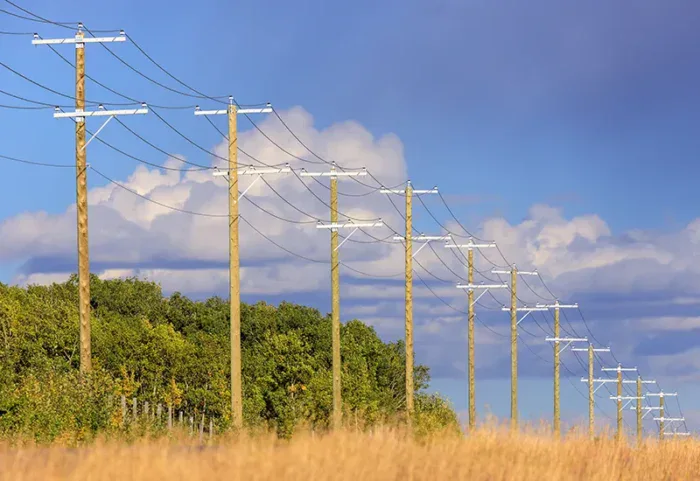
PLS-CADD/LITE is used to quickly model a few spans. Developed specifically for Joint-Use type applications, PLS-CADD/LITE is the ideal tool for quick sag-tension, clearance and loads calculations. While the program can be used in stand-alone mode, it can also be combined with our PLS-POLE program to provide the ultimate Joint-Use structural analysis system.
PLS-CADD/LITE allows you model simple systems of a couple spans as quickly and as simply as possible. Each wire in PLS-CADD/LITE is represented by a single row of input data. This row defines the span’s end points and wire tension. The interface is flexible and allows definition of span geometry by the coordinates of its attachment points or by span length and bearing. Likewise, the program gives a range of options for sagging the wire including input of tension, catenary constant, sag, or entry of coordinates of a surveyed point on the wire. A wizard interface walks you through the process of creating your model. This wizard can link to the Wood Pole Wizard in PLS-POLE to provide a seamless experience creating not only the wires, but also the structure that supports them.
PLS-CADD/LITE uses the same cable libraries and engineering criteria as the full version of PLS-CADD. It also shares many of the same proven calculation routines. Its streamlined interface does away with the need for the terrain and structure modeling in the full version of PLS-CADD.
CAISSON
Analysis and design of reinforced concrete pier foundations
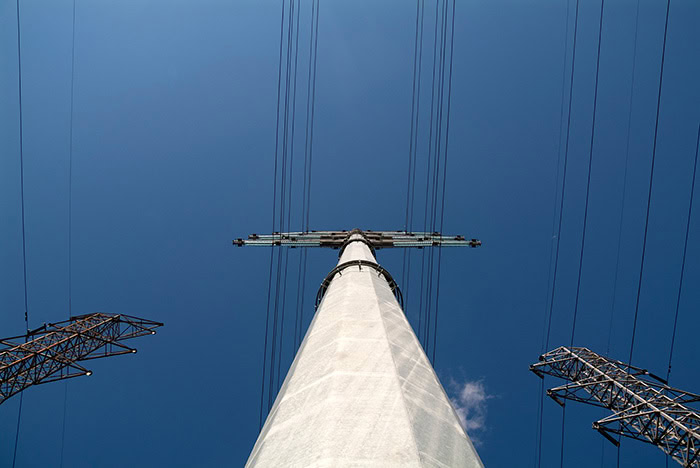
CAISSON is a Microsoft Windows program for the analysis and design of moment resisting reinforced concrete pier foundations and direct embedment depths for poles. Such piers are typically used as foundations for single tubular steel poles. CAISSON uses ultimate strength design concepts for both the structural design of the pier and its sizing to avoid soil failure.
All analysis and design assumptions are described in the User’s Manual which is available upon request. CAISSON does not perform any calculation of deflection under service loads. It does not verify the uplift capacity of the foundation, a condition that may have to be checked when the pole is part of an H-Frame structure. CAISSON is based on classical theory that has not changed in many years and is no longer being actively developed.
CAISSON includes:
- Specialized program for analysis and design of reinforced concrete pier foundation
- Extreme ease of input through interactive menus
- Automatic determination of required pier depth from given diameter
- Design of pier reinforcing cage
- Convenient design summaries
- Detailed User’s Manual with example
- Imperial or SI (metric) units
