

Vatican City
Italferr Preserves Historic St. Peter’s Basilica with a Digital Twin
Bentley’s iTwin® Platform Saved 50 Hours In Modeling Time, Delivering 20 Days Ahead Of Schedule
Italferr S.p.A
Protecting A World Heritage Site
One of the world’s most important architectural and historical structures, and one of the holiest Catholic shrines, St. Peter’s Basilica is an iconic landmark that brings in tens of thousands of pilgrims and tourists every year. Designed by Michelangelo and Gian Lorenzo Bernini and constructed over a period of more than a century, the Basilica is one of the most renowned works of Italian Renaissance and Baroque architecture and the largest church in the world by interior measure. Many popes have been interred there since the early days of Christianity, and it is one of the Seven Pilgrim Churches of Rome.
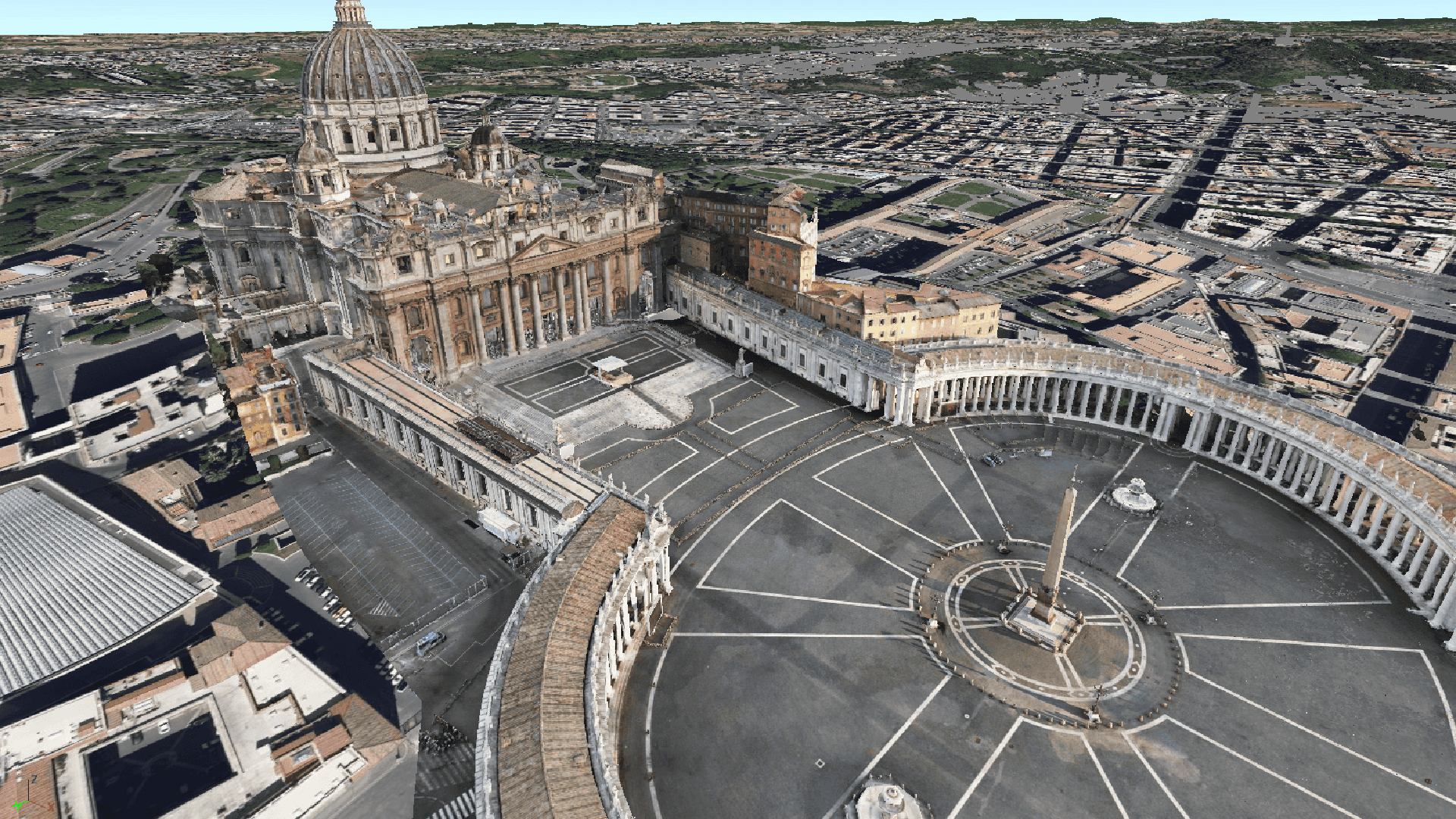
Italferr was hired by the Fabric of Saint Peter, an institution of the Roman Catholic Church responsible for the conservation and maintenance of the Basilica, to create a digital twin of the structure. They were tasked with mapping and analyzing every element of the building for constant structural monitoring in anticipation of the upcoming Jubilee 2025. The project had two main objectives: 1) to create a digital twin with all the information accumulated over the centuries about the Basilica, and 2) to implement a monitoring system using digital methods and applications to ensure the protection of this extraordinary construction.
When complete, the digital twin will become a key resource for preserving a unique architectural and religious heritage for the world. “Through the use of advanced algorithms, it will be possible to analyze the response of the structure to static and dynamic stresses, obtain in-depth knowledge of the health of the structures, and develop a permanent structural monitoring system,” said Daniela Aprea, Italferr’s director of technology innovation digital spoke and digital rail infrastructure development. Data from the sensor network will also be integrated into a digital twin, and the processed information will be shared with the Fabric of Saint Peter for future maintenance and management of the Basilica.
The Quest For Effective Data Management
The historical and religious significance of this structure meant that Italferr needed to ensure that a digital twin of the Basilica was as accurate as possible. However, it required an extensive survey campaign. To achieve their goal, Italferr’s first step was to conduct a geometric survey of the forepart. Because it was built in the 1600s, it must be closely monitored for signs of deterioration or damage.
“The goal of this phase was to reconstruct a digital model using point clouds and photos to determine the dimensions of key architectural and structural elements and gain information about what is not accessible [using traditional surveying methods],” said Aprea.
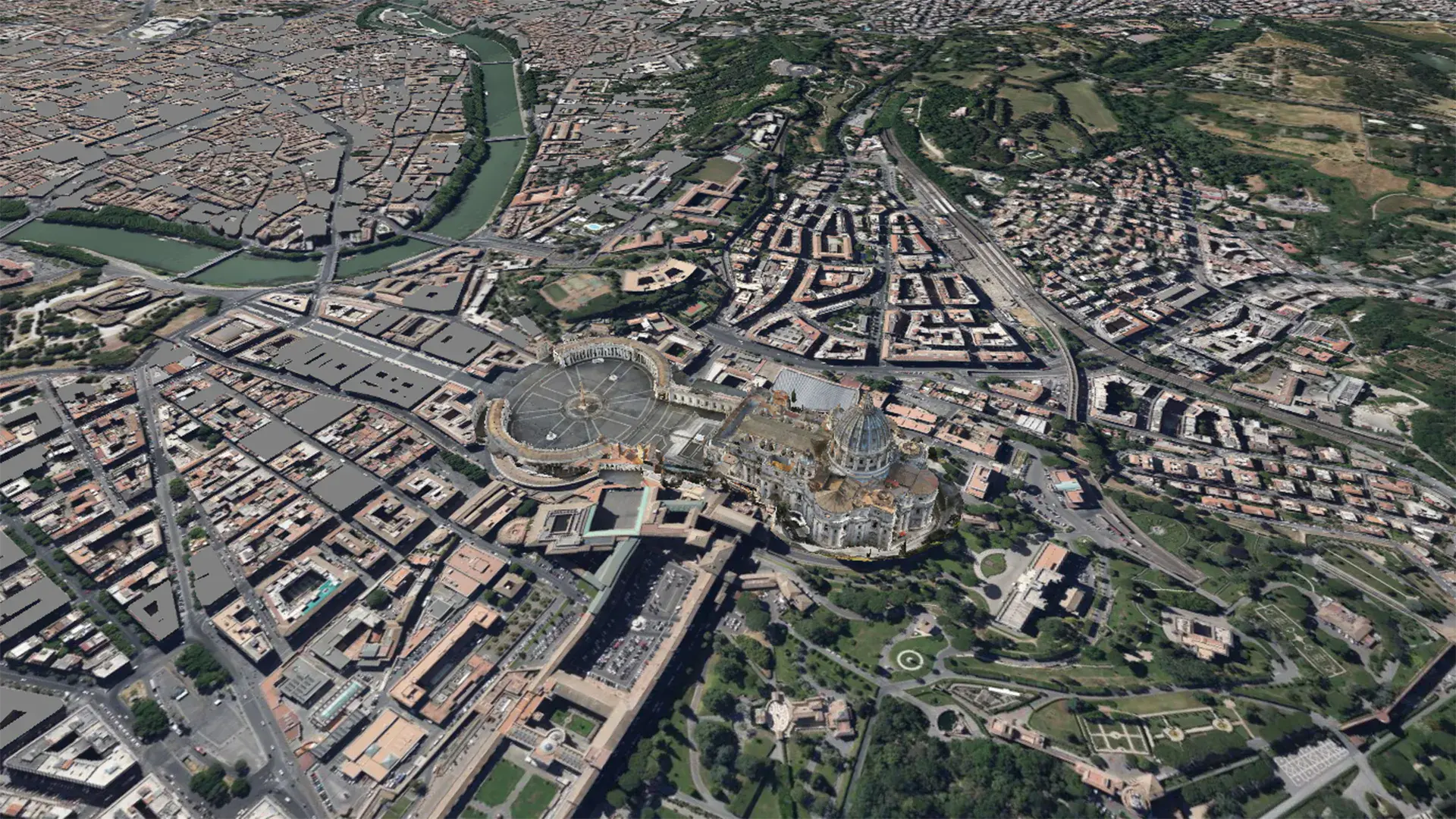
However, this process resulted in a large amount of data needing to be managed and processed into a reality mesh, as well as shared among multiple disciplines and stakeholders for continued monitoring. By the end of this phase, the team had acquired over three terabytes of data for an area of 65,000 square meters in plan and 240,000 square meters of vertical surfaces. Therefore, to address these data management challenges within a six-month timeline, Italferr needed integrated and open 3D modeling and digital twin technology
Key Takeaways
- Italferr was hired by the Fabric of Saint Peter to create a digital twin of the structure.
- When complete, the digital twin will become a key resource for preserving a unique architectural and religious heritage for the world.
- Italferr chose ProjectWise, iTwin Capture Modeler, and MicroStation to manage the multi-sourced data and generate a digital twin shared among 30 people.
- By working in a collaborative digital environment, Italferr saved 50 hours in modeling time, delivering the model 20 days ahead of schedule.
- The team estimates going digital saved them 200 hours on the project.
- Using a digital twin reduced the number of on-site visits by 75%, letting stakeholders view the survey without having to leave their office.
Project Playbook

Creating A Digital Twin Of A Historical Landmark
Already familiar with Bentley applications, Italferr chose ProjectWise, iTwin Capture Modeler (formerly ContextCapture), and MicroStation to manage the multi-sourced data and generate a digital twin shared among 30 people.
To manage the large amount of data and encourage sharing and collaboration, the team used ProjectWise to create a data sharing and collaboration platform that was accessible to all project stakeholders. Users of the platform could access survey data, as well as geometric, informational, and analytical models. “ProjectWise was functionally structured for use, with workflows and transitions between different states, supported by weekly coordination meetings and reviews. Each participant had logins and privileges to ensure that operations were tracked, and that the necessary information was available for their role in the project,” said Aprea.
Once the information was housed in one place, Italferr processed and managed point clouds through iTwin Capture Modeler. They created a fully navigable 3D model with the correct scale and proportions, measurable by linear lengths, surfaces, and volumes. The 3D model was also geo-referenced with the same system used by common mobile devices for geolocation.
“With the use of iTwin, the foundation was laid for the implementation of the digital twin,” said Aprea. By taking the data sources housed in ProjectWise’s central location and combining it with the single reality mesh, the team was able to create a digital twin to both view and make changes in real time. They were also able to create specific models that could then be shared across multimedia platforms.
“The creation of the digital twin required an extensive survey campaign using cutting-edge technologies, such as topography, laser scanning, aerial photogrammetry using drones, and geo-radar,” said Aprea. “With these capabilities, it was possible to create a complete model of the work, considering that, due to its history, exhaustive drawings of the Basilica were not available, with all information regarding the rooms, elevations, wall thicknesses, floors, and vaults.”
Going Digital At The Vatican
By working in a collaborative digital environment, Italferr saved 50 hours in modeling time, delivering the model 20 days ahead of schedule to the Fabric of Saint Peter. In fact, the team estimates that by going digital, they saved 200 hours on the project.
“The implementation of the digital twin of St. Peter’s Basilica was a challenging project both in terms of time and complexity […] The use of Bentley’s solutions made it possible to optimize not only the sharing and collaboration processes, but also the modeling processes,” said Aprea.
Using a digital twin proved a more efficient way to share information with stakeholders, increasing data sharing efficiency by 75% when compared to traditional sharing applications. It also reduced the number of on-site visits by 75%, letting stakeholders view the survey without having to leave their offices.
But perhaps more importantly, this digital twin serves as unique information technology that will showcase the structure’s past, present, and future. It will allow the Fabric of Saint Peter to monitor and maintain the landmark site for years to come. “The implementation of a structural monitoring system for St. Peter’s Basilica is of extraordinary value not only in terms of engineering but also in social terms, as it will make it possible to preserve in the decades to come the full functionality of the work that is the centerpiece of the Christian faith throughout the world,” said Aprea.