Your Guide for Deep Foundation Design and Analysis with PLAXIS 3D
With Your Registration, you will get access to PLAXIS Project Files and a step-by-step workflow.
Geotechnical engineers face complex challenges when designing foundations—from modeling soil-structure interaction and calibrating with in-situ tests to calculating subgrade modulus and navigating heterogeneous ground conditions. Achieving optimal performance is essential for controlling settlements, minimizing differential movement, reducing reinforcement, and lowering costs.
A powerful Finite Element Analysis (FEA) tool is essential. PLAXIS enables engineers to:
- Simulate real soil behavior with confidence
- Integrate field data for reliable calibration
- Model complex structural interactions
- Balance safety, performance, and cost
Discover how PLAXIS transforms geotechnical complexity into clarity—empowering confident decisions and delivering robust, cost-effective designs.
Available On Demand
Deep foundations play a critical role in geotechnical engineering, where professionals regularly encounter complex challenges—ranging from aligning design with in-situ test data, to accurately modelling soil-structure interaction and interpreting heterogeneous subsurface conditions.
This webinar explores how PLAXIS empowers geotechnical, structural, and soil improvement specialists to overcome these challenges. PLAXIS offers powerful possibilities such as advanced calibration with in-situ data, robust modelling of soil-structure interaction, and modelling of soil improvement and deep foundation systems including piles and piled rafts. Additionally, it provides advanced constitutive soil models, making it a comprehensive platform to design safe, efficient, and optimized foundation solutions.
Join our experts, Dr. Richard Witasse and Mohamed Hasan (Technical director in Keller), in a live webinar where they will demonstrate how to enhance your modelling capabilities using PLAXIS. Don´t miss the opportunity to unlock the potential of PLAXIS for deep foundations and elevate your geotechnical modelling skills.
What you will learn:
- Soil behaviour calibration using zone load testing techniques.
- 3D modelling of rigid inclusions with calibrated embedded beam elements.
- Optimizing pile design through soil calibration based on BDSL and lateral pile test data.
- Modelling full scale piled raft using calibrated embedded beam elements and checking group effect.
- Assessing the impact of liquefied soils on axial and lateral pile capacity.
Available On Demand
Are you looking to optimize your foundation design strategy? Whether you’re working with piles, piled rafts, in excavations, or navigating the evolving Eurocode framework, this webinar is for you.
Piled raft foundations have long presented a challenge for geotechnical and structural engineers.
Key questions often arise:
How can the raft contribute effectively to load transfer? What’s the best way to model a piled raft within an excavation?
How should piles be connected to the raft? Can I include partial safety factors in my analysis? How do I calibrate my model using in-situ tests?
To address these questions with confidence and accuracy, a powerful and reliable finite element analysis (FEA) tool is essential. PLAXIS provides the robust functionalities engineers need to tackle these challenges and deliver high-performance foundation solutions.
In parallel, the evolution of the Eurocode has reached a critical phase. Since 2015, the new generation of Eurocode standards has been under development—with many parts already finalized and published. These updates are reshaping the design landscape.
Join our experts Dr. Richard Witasse, Dr. Sébastien Burlon and Dr. Witold Bogusz in this insightful session. Don’t miss this opportunity to elevate your foundation design approach with cutting-edge tools and update your code knowledge.
What you will learn:
- Use of numerical methods for ultimate limit state verification in the second generation of Eurocode 7
- Input Factoring (strength properties) and Output Factoring (effects of actions) in numerical modeling
- Implementation of partial factors in PLAXIS 3D using Design Approach feature
- Case Study: Piled Raft Foundation analysis
Register Now
Meet the Presenters
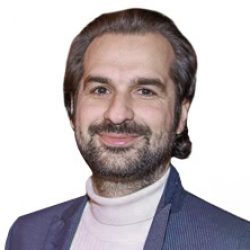
Daniel Berro is an experienced professional with 11 years of experience working in the geotechnical engineering sector and delivering cost effective geotechnical projects across Europe, Africa, and the Middle East. As a product engineer at Bentley, he helps professionals across EMEA in solving their complex geotechnical engineering problems and improving their analysis by providing them with best practices for their design workflows.

Recognized as an expert in geotechnical analysis and engineering, Richard Witasse has more than 20 years of experience working with geotechnical digital tools and geotechnical finite element analysis software. After starting his career as a software engineer in the field of finite element analysis software for reinforced concrete structures, Richard became an application engineer and worked for the global leaders in geotechnical analysis software. Richard joined PLAXIS in 2008 and has always worked since then on geotechnical consulting, customer success and training for the many users of the most popular digital solutions for geotechnical engineering and analysis. Since 2022, Richard Witasse is Principal Application Engineer with Seequent.
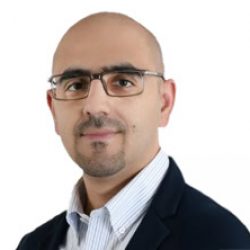
Mohamad Hasan is technical director for the Middle East and Africa at Keller, with over 16 years of experience in geotechnical and structural engineering. He leads a diverse team focused on delivering technically advanced and cost-effective ground engineering solutions across the region. Mohamad’s portfolio includes deep foundations, retaining systems, and a broad spectrum of ground improvement techniques implemented on some of the most complex infrastructure projects in the Middle East and Africa.

Witold Bogusz
Chair of ISSMGE ERTC10 on Evaluation of Eurocode 7, Chair of PKN TC254 on Geotechnics, Senior Geotechnical Engineer
Bechtel
LinkedIn
Witold Bogusz is a senior geotechnical engineer with 15 years of professional experience in design, consulting and research. He is a chartered engineer with the Institution of Civil Engineers in the U.K., as well as with the Chamber of Civil Engineers in Poland. Over his career, he extensively applied numerical modelling skills for solving a wide range of geotechnical challenges and structures, including slopes, embankments, retaining walls, spread and pile foundations, ground improvements, and tunnels.
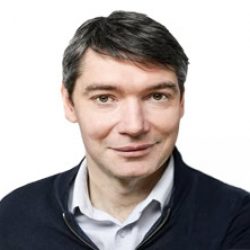
Sébastien Burlon
Vice-chair of TC250-SC7 and Chair of the French SC7 mirror group, Geotechnical Expert
Cerema
Sébastien Burlon is a geotechnical expert at Cerema, a major French public agency for developing public expertise in the fields of urban planning, regional cohesion and ecological and energy transition. He has been involved in developing high-rise towers, bridges, offshore wind farms, underground structures, nuclear power plants, and maritime infrastructure, as well as research and developments activities for cyclic loading for pile, energy pile, and swelling and shrinkage of clay. He is now vice-chair of TC250-SC7 and chair of the French SC7 mirror group.