

Minnesota Department of Transportation
Collins Engineers Uses Digital Inspection to Restore Iconic Pedestrian Bridge in Minneapolis
Leveraging Digital Twin Applications Saves 20% in Field Inspection Time by Accurately Identifying Repairs
Collins Engineers, Inc.
Rehabilitating A Symbol Of Prosperity
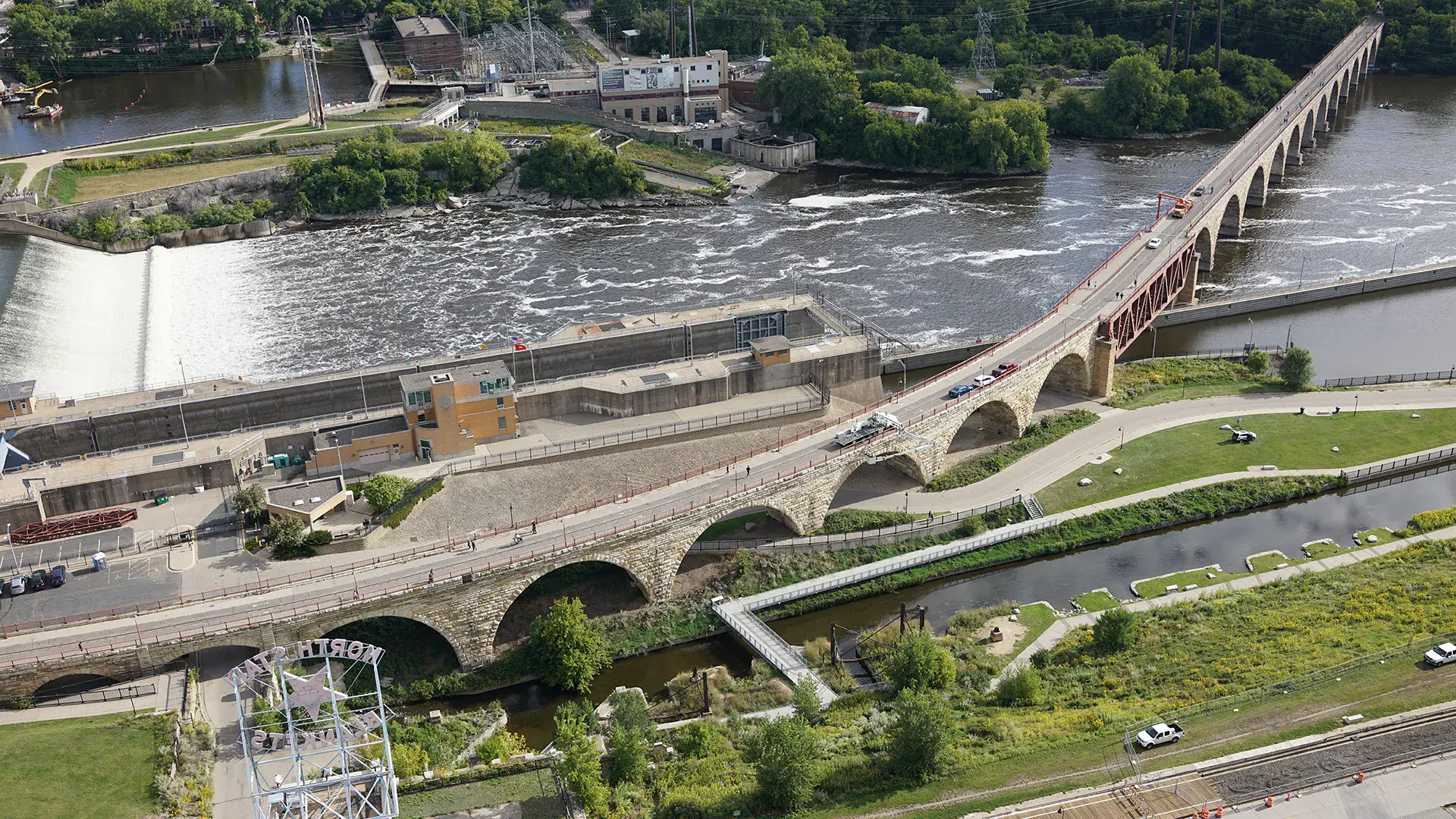
Spanning the Mississippi River in downtown Minneapolis, Minnesota, the Stone Arch Bridge is a former railroad bridge built in 1883 that helped further the late 19th century boon of the city’s thriving milling industry. Located near Saint Anthony Falls, the bridge is celebrated as an intrinsic part of the city’s heritage and remains an emblematic architectural feature offering incredible views of the waterfalls and cityscape. A popular photography setting and highly visited destination representing an era of tremendous growth in Minneapolis, the Stone Arch Bridge is recognized as a symbol of prosperity and a National Civil Engineering Landmark.
In the early 1990s, the Minnesota Department of Transportation (MnDOT) converted the 2,100-footlong, 22-span, masonry bridge into a pedestrian and bicycle pathway. To ensure public safety and preserve the historical icon, MnDOT initiated a USD 12 million rehabilitation project. They hired Collins Engineers, Inc. to assess and restore the bridge’s structural integrity, identifying deficiencies and repairing the bridge to ensure that it remains a valuable cultural and physical asset throughout the future. “The Stone Arch Bridge is 140 years old and requires significant work to ensure the bridge performs well for years to come,” said Barritt Lovelace, director of unmanned aircraft systems (UAS), artificial intelligence (AI), and reality modeling at Collins Engineers.
Inspection And Data Collection Challenges
As the first significant restoration of the Stone Arch Bridge in decades, the project required a detailed inspection of the entire bridge structure’s condition, including stone arches, embankments, piers, and underwater foundations. Given the age and size of the masonry structure, Collins faced challenges developing repair plans that traditional data collection and inspection methods could not accommodate. “The biggest challenge is the sheer scale of the bridge. It’s a long bridge and there’s a very large surface area of masonry work, so to capture information using traditional methods is very difficult,” said Lovelace. Conventional workflows would be time-consuming, significantly impact public use of the bridge, and might not produce the level of detail required to generate accurate repair plans.
To overcome the shortcomings of traditional inspection and data collection methods, Collins Engineers sought to digitize inspection data and generate a 3D model of the bridge. They had used reality modeling technology on previous projects; however, it lacked the quality required for inspecting and modeling this large, complex structure. They wanted to utilize the most advanced engineering technologies to complete the restoration of this historic structure, built at a time when such digitization would have seemed unfathomable. To collect sufficient data, accurately model the bridge, and minimize impact to pedestrian traffic, Collins Engineers realized that they needed an integrated digital survey, modeling, and inspection solution.
Key Takeaways
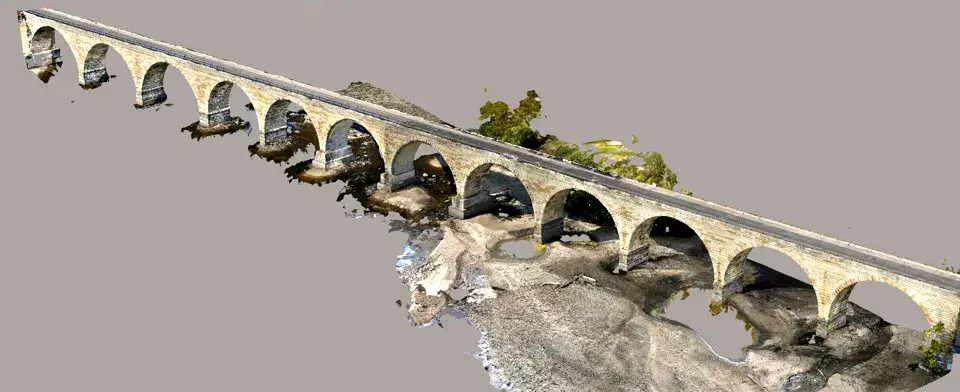
- Collins Engineers used iTwin Capture Modeler to generate a high-fidelity 3D model as the basis of a digital twin from 13,000 drone-captured images, improving quality and quantity of data.
- Digital twin applications saved 20% in field inspection time and limited bridge closure to just four days.
- The digital twin solution will reduce construction risks that are expected to save MnDOT 10% to 15% in costs.
Project Playbook

Digitizing Bridge Rehabilitation Workflows
Collins Engineers set out to supplement conventional inspection processes using digital twins to streamline workflows and change how they perform inspections. “The first step in utilizing UAS and digital twins for a large rehabilitation project includes the field capture of the data,” said Lovelace. Using unmanned aerial vehicles, they captured over 13,000 images and processed them in iTwin Capture Modeler, generating a high-fidelity 3D model of the Stone Arch Bridge that was then uploaded to the cloud. Integrating Bentley’s digital twin technology, Collins Engineers performed virtual inspections in a mixed reality environment. Bridge inspectors in the field could access the digital twins via tablets and record their inspection information directly on the models. Traditionally, inspection notes were recorded and communicated using pencil and paper, accompanied by photos, that lacked the necessary detail to make definitive decisions that would help them both timely and safely complete the project. However, working with the 3D digital twin meant that the field team could inspect the bridge remotely, record their findings directly on it, and accurately pinpoint the areas in need of repair.
The unique application of Bentley’s reality modeling and digital twin technology brings the physical bridge into the office in a way never previously possible. The digital twins not only provide valuable data and information but also function as a communication tool, enabling real-time collaboration and problem-solving among the team. While the models helped the design team precisely identify physical, structural deficiencies in a digital environment, Collins Engineers realized the models’ potential to connect with the public, providing virtual visual insight and a better understanding of the restorative works. “While performing field work, the public was intrigued by the use of technology and it became apparent it was a way to connect the public to our project,” said Lovelace. With mixed reality, Collins Engineers took advantage of the expanded insight not only among the team and the public, but also from experts throughout the country. They could virtually visit the bridge, eliminating the need to travel, while also providing a true, detailed perspective to optimize rehabilitation of the historic structure.
Leveraging Digital Twins Preserves Cultural Asset
Leveraging digital twins in a mixed reality environment resulted in faster and more accurate data collection and inspection methods, streamlined model access, and minimized impact to the public, compared to conventional processes. Using advanced digital technologies to inspect the bridge, Collins Engineers shortened the time that the bridge was out of service during inspection, limiting pathway closure to just four days. By enabling inspection engineers to directly document their findings on the models through tablets, Collins Engineers saved 20% in field inspection time while also improving the quality and quantity of data. Bentley’s integrated technology facilitated more informed decision-making to reduce risks and costs associated with conservative decisions based on lack of information. “The wealth of information provided by the models was utilized throughout planning and design, and this data will also be shared with contractors during the construction phase,” said Lovelace. Making the digital twin available to contractors provided more detailed information and insight into the structural condition of the bridge, allowing for more accurate construction bids that will save MnDOT 10% to 15% in construction costs.
Implementing a digital rehabilitation workflow enabled the team to pinpoint the repair areas, which will reduce construction risks. During construction, engineers will reference the 3D model so that repairs can be made confidently and quickly to limit the time the bridge is unavailable for public use. After the project is complete, Collins will extend the use of the digital twins for future lifecycle planning and maintenance to ensure the bridge continues to remain structurally safe and a valuable cultural asset to the city and state. “Rehabilitation of the Stone Arch Bridge will ensure this public asset will continue to serve as a historical icon for the city of Minneapolis and as an important pedestrian link for many decades to come,” said Lovelace.