

Singapore
UES Holdings Creates Digital Twin to Ensure Singapore’s Water Sustainability
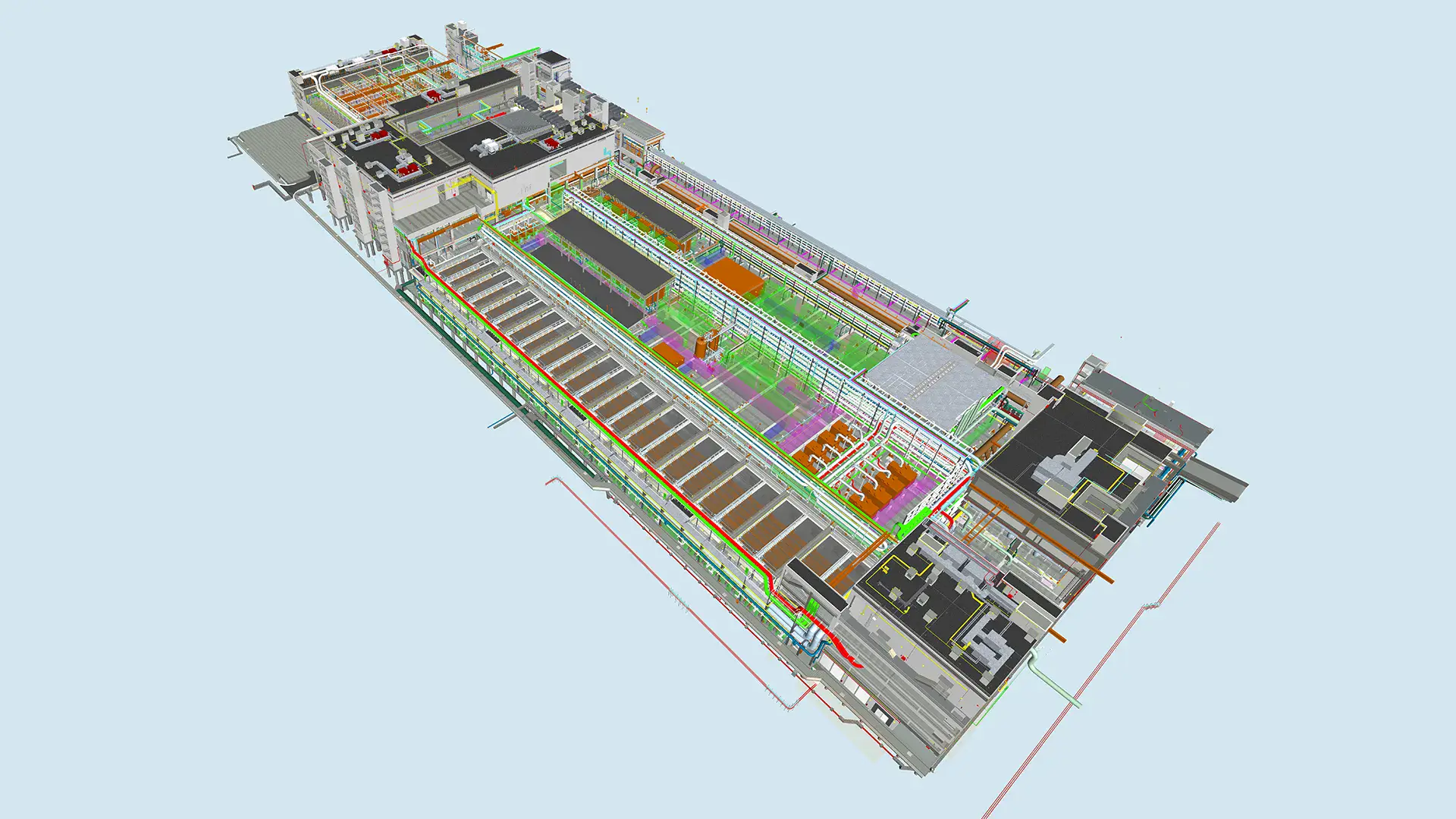
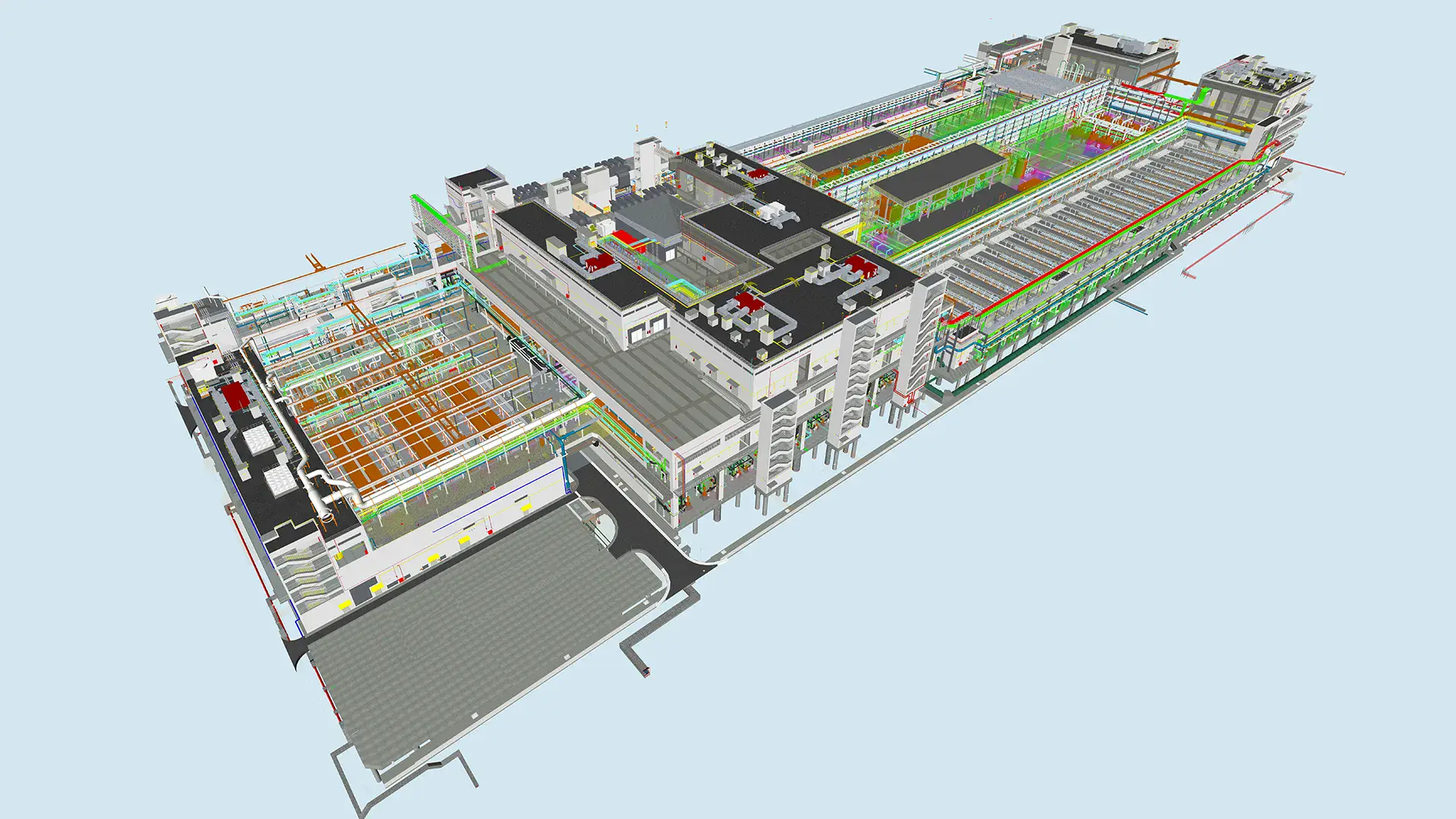
Bentley applications helped control time and costs delivering Tuas Water Reclamation Plant
UES Holdings Pte Ltd
A Game-Changer For Water-Scarce Singapore
Singapore’s National Water Agency, PUB, is building the state-of-the-art Tuas Water Reclamation Plant (TWRP) as part of the second phase of the country’s larger deep tunnel sewerage system (DTSS) project, which will extend the underground tunnel sewerage network to the western and southern parts of the nation. A key component of DTSS, TWRP serves as a treatment facility for industrial and domestic household water, boosting PUB’s capability to reclaim and recycle water on a continuous basis. Together, the DTSS and TWRP will provide a game-changing solution resilient to climate change and extreme weather events for water-scarce Singapore.
Designed to incorporate sustainability features with energy-efficient equipment, renewable energy generation, and resource recovery technologies, TWRP will treat 800,000 cubic meters of wastewater water per day, collected from Singapore homes, industries, and businesses. UES Holdings worked as the main contractor and subcontractor for the project, tasked with designing and installing mechanical, electrical, instrumentation, control, and automation equipment to treat 650,000 cubic meters of water daily. “As one of the largest water reclamation plants in Singapore, [TWRP] has the significant capacity to treat a large volume of wastewater, helping to meet the growing water demands of the city-state,” explained Babu Jeganathan, BIM manager at UES Holdings.
Addressing Advanced Treatment And BIM Requirements
To ensure the production of high-quality reclaimed water, PUB imposed stringent treatment standards, requiring state-of-the-art technology and advanced treatment processes, such as biological processes, membrane filtration, and disinfection. The scope of the works for UES Holdings’ contract involved design and arrangement of water storage and pumping equipment, including instrumentation and monitoring works. It also involved implementing NEWater processes for domestic liquids, which included recycling treated used water into ultra-clean, high-grade reclaimed water. “Almost 200 of our piezometers and 50 of our arc-weldable strain gauges were used in the project,” said Jeganathan.
For successful implementation of the TWRP project, it was crucial that UES Holdings adhere to the consultant’s requirements for an integrated BIM platform. They realized that they needed a coordinated BIM approach that allowed them to integrate scheduling, cost, and environmental data into the 3D model to deliver an energy-efficient, eco-friendly, and sustainable facility. “TWRP requires 6D as the data and information of the equipment has to be incorporated into the BIM model,” emphasized Jeganathan.
Key Takeaways
- TWRP is a state-of-the-art water reclamation mega project designed to maximize water recovery and reduce energy consumption in Singapore.
- The facility is a key component of the DTSS that will treat 800,000 cubic meters of water per day.
- UES Holdings worked as a main contractor and subcontractor, designing and installing instrumentation and monitoring equipment to support domestic NEWater processes.
- Leveraging Bentley applications, they established an integrated BIM platform and digital twin.
Project Playbook

Leveraging Bentley’s Integrated Modeling And Simulation Applications
UES Holdings determined that they could meet all project requirements by establishing a connected digital environment and digital twin using Bentley ProjectWise and Bentley Open applications. “In line with these requirements, we have opted to utilize Bentley applications for the generation of the BIM model,” said Jeganathan. They first modeled the project elements with OpenBuildings and OpenPlant, incorporating all equipment information into the 3D models. Next, they simulated the construction process using Bentley SYNCHRO. By deploying Bentley technology, UES Holdings streamlined workflows, aligned their BIM approach with the scope of the TWRP project, and established a digital twin that guaranteed seamless data integration throughout the project lifecycle.
Digital Twin Drives Savings And Sustainability
“Bentley technology plays an important role to reduce the cost of rework on site,” stated Jeganathan. The automation and synchronization between Bentley OpenBuildings and OpenPlant ensured accurate modeling, eliminating the need for manual cross checking of piping and instrumentation diagrams with the 3D model. Working in an integrated engineering platform streamlined workflows, improved collaboration, and accelerated the project schedule. By going digital, UES Holdings optimized design coordination, as well as reduced printing of paper drawings. The digital twin helped control time and costs throughout the project, while ensuring sustainable development, delivery, operations, and maintenance.
TWRP will play a vital role in Singapore’s efforts to achieve water sustainability and security, demonstrating the country’s commitment to innovation, efficiency, and environmental stewardship in managing its water resources. The treatment of wastewater and the production of reclaimed water will help protect the environment by reducing pollution and preserving freshwater resources. “Reclaimed water produced by the plant provides a cost-effective alternative to potable water for various non-drinking applications, contributing to economic efficiency and sustainability,” concluded Jeganathan.