SACS-STAAD cross-platform collaborative design helps efficiently optimize the entire system of offshore photovoltaic structures
SUSTAINABILITY CHALLENGE
One of the 4 Key Sustainability Challenges
Story Highlights
UTILIZED SOFTWARE
Bentley Software
LOCATION
ORGANIZATION/COMPANY
PROJECT SUMMARY
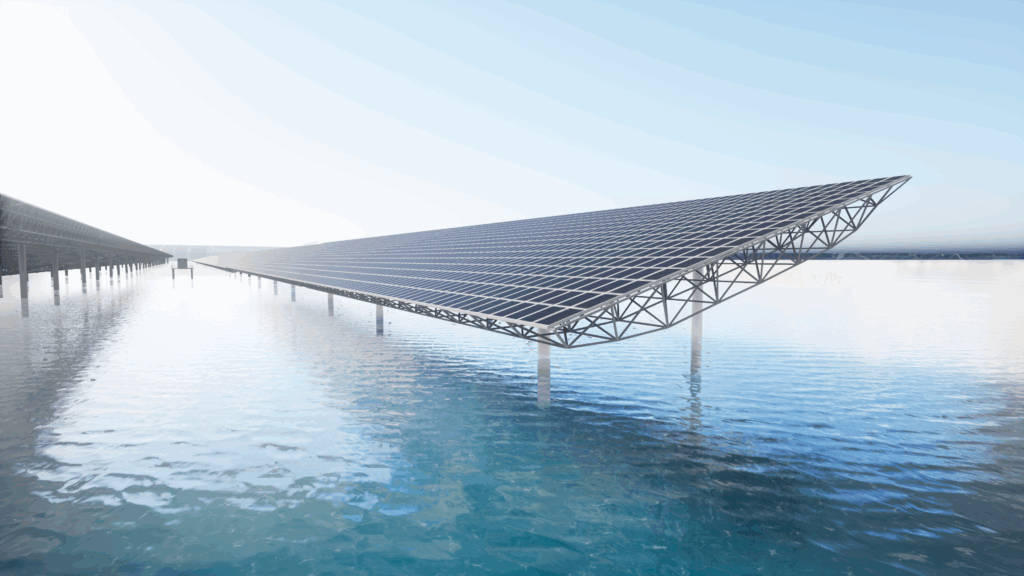
PowerChina’s Qinhuangdao Offshore PV Project is the first and most challenging of its kind in Hebei, facing 35 cm sea ice, high wind, and soft silt in the Bohai Sea. To ensure safety and economy, PowerChina used Bentley SACS and STAAD in an innovative cross-platform collaborative digital twin, creating a “pile-soil-structure” full-system optimization model. This digital approach accelerated the design cycle by 20 days and cut design costs by 22%. Precise, multi-load simulation reduced the truss steel by 18% and pile steel by 15%, while boosting structural resistance to ice and wind loads by 30%. The 342 MW project will generate 403 million kWh annually, saving 175,000 tons of coal and cutting 337,300 tons of CO2 pioneering blue energy development and strongly supporting China’s Energy Transition and “Dual Carbon” (peak carbon dioxide emission and carbon neutrality) goals.
Relevant UN Sustainable Development Goals (SDGs)
SDG Goal 1
No Poverty
End poverty in all its forms everywhere.
SDG Goal 2
Zero Hunger
End hunger, achieve food security and improved nutrition and promote sustainable agriculture.
SDG Goal 3
Good Health and Well-Being
Ensure healthy lives and promote well-being for all at all ages.
SDG Goal 4
Quality Education
Ensure inclusive and equitable quality education and promote lifelong learning opportunities for all.
SDG Goal 5
Gender Equality
Achieve gender equality and empower all women and girls.
SDG Goal 6
Clean Water and Sanitation
Ensure availability and sustainable management of water and sanitation for all.
SDG Goal 7
Affordable and Clean Energy
Ensure access to affordable, reliable, sustainable and modern energy for all.
SDG Goal 8
Decent Work and Economic Growth
Promote inclusive and sustainable economic growth, full employment, & decent work for all.
SDG Goal 9
Industry, Innovation and Infrastructure
Build resilient infrastructure, promote inclusive and sustainable industrialization & foster innovation.
SDG Goal 10
Reduced Inequalities
Reduce inequality within and among countries.
SDG Goal 11
Sustainable Cities and Communities
Make cities and human settlements inclusive, safe, resilient and sustainable.
SDG Goal 12
Responsible Consumption and Production
Ensure sustainable consumption and production patterns.
SDG Goal 13
Climate Action
Take urgent action to combat climate change and its impacts.
SDG Goal 14
Life Below Water
Conserve and sustainably use the oceans, seas and marine resources for sustainable development.
SDG Goal 15
Life on Land
Sustainably manage ecosystems, combat desertification, reverse land degradation, & halt biodiversity loss.
SDG Goal 16
Peace, Justice and Strong Institutions
Foster peaceful & inclusive societies, ensure justice access, & build effective, accountable institutions at all levels.
SDG Goal 17
Partnerships for the Goals
Strengthen the means of implementation & revitalize the Global Partnership for Sustainable Development.