

OCT 02, 2026
Improving flow, comfort, and safety: LEGION crowd and pedestrian simulation software explained
By Courteney Tinch, Product Marketing Manager, and Frederick Frank, LEGION Product Manager
Key takeaways
- Pedestrian simulation software models and predicts how people move through space, so teams can test designs and operations before implementation.
- LEGION simulates pedestrian movement using experience-based methods, helping you evaluate flow, crowding, and wayfinding in buildings and public spaces.
- The application supports performance-based design for capacity, comfort, and safety before infrastructure is built or operating schemes are put into practice.
- Decision-ready output (visual playback, as well as analysis of densities and travel times) make it easier to communicate results, and its science-based, empirically validated approach lends confidence to high-impact decisions.
Whether you’re designing a new rail station, expanding an airport terminal, or planning crowd operations for a major venue, one question is key: How will people move through and use my space?
Pedestrian modeling and simulation software helps project teams answer that question early by creating a digital representation of their venue and then modeling and predicting how people will move through an area. Teams can then test designs and operational decisions before they’re implemented.
Determine the impact of design on pedestrian behavior
As demand grows and the layout becomes more complex, pedestrian movement becomes harder to conceptualize, and rules of thumb and static guidelines fall short. Too often, bottlenecks and other movement problems don’t become apparent until after the project is completed.
LEGION simulates pedestrian behavior by proactively assessing how people will behave in specific, holistic, spatial, and temporal contexts. By showing planners and designers how their stations, venues, and spaces will work during their peak periods, disruptions, and future scenarios, it helps them find and fix problems pre-emptively, reducing risk and improving operations. This simulation also lets designers assess the impacts of potential upgrades, informing better investment and sequencing decisions.
As a result, LEGION is trusted by transport authorities, infrastructure owners, engineers, and designers to evaluate capacity, comfort, and safety in high-traffic environments including rail stations, airports, stadiums, and urban developments as an essential assessment of whole system function, enabling iterative testing and improvement towards optimal performance before construction.
A modern approach to pedestrian modeling and crowd simulation
LEGION simulates pedestrian movement at the individual level. Instead of treating a crowd as a single flow, it models each person as an independent agent whose moment-by-moment decisions contribute to the formation of realistic crowd patterns.
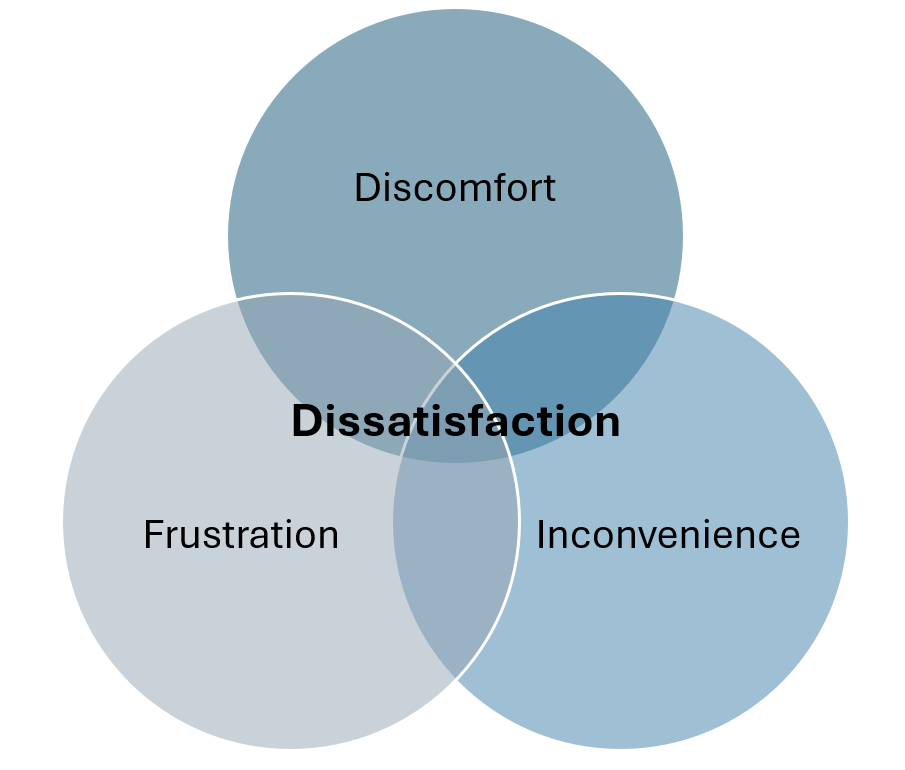
These agents are given speed and personal space preferences, then directions by the user of the software. They experience inconvenience when deviated from their direction, frustration when unable to go their speed, and discomfort when their personal space is compromised. These combine into an overall dissatisfaction metric.
As these individuals interact with each other and the area layout, larger patterns emerge, such as bottlenecks, lane formation, crowding, and queuing. These patterns help teams see how design and operational choices affect throughput, comfort, and safety, with behavior grounded in research and validated against real-world observations.
How does LEGION fit into your workflow?
LEGION is typically used in an iterative loop: build a model, simulate how people move, analyze the results, then refine the design or operational plan and test again. The software suite includes tools to build spatial models, run simulations, analyze results and produce insightful reports that support decisions. Here’s a typical workflow:
- Build a digital model. Create a 2D representation of the venue or site and define the characteristics that influence movement, such as obstacles, access points, vertical circulation, and activity areas such as waiting and queuing zones. Importing design drawings is a common starting point.
- Define demand and operations. Specify when and where pedestrians enter, what their destinations are, and operational conditions such as service patterns or disruptions that you want to test.
- Run simulations and replay scenarios. Simulate circulation, interchange, and evacuation behavior, explore what-if cases (for example, exit closures or late arrivals), and compare alternatives.
- Analyze and communicate results. Use videos, maps, graphs, and playback to understand crowd densities, travel times, space use, preferred paths, and evacuation performance, then export the results for stakeholder reporting.
Key capabilities: From modeling flexibility to decision-ready output
- Model complex geometry and operations. LEGION supports elaborate building layouts and lets you build, test, and revise models by using automated routing and simplified objects, which is helpful when comparing multiple layout-and-operations concepts on tight timelines.
- Deploy experience-based pedestrian movement. LEGION’s simulation represents pedestrians as individual entities whose interactions with each other and with obstacles produce realistic collective patterns, often described as emergent behavior.
- Test performance under a range of scenarios. Evaluate different demand levels, route choices, and operational changes, including planned disruptions, incident-response, or evacuation strategies.
- Analyze what matters to stakeholders. Results can be presented using clear visuals including maps, graphs and videos to communicate crowding, journey times, levels of service, preferred paths, and other key indicators in design reviews and business cases.
Confidence in the results: research-based and validated
Because pedestrian modeling is ultimately about human behavior, credibility matters.
LEGION is based on extensive scientific research into pedestrian behavior, with patented algorithms and simulation results validated against empirical measurements and qualitative studies. Third-party acceptance testing and a long track record of use on projects worldwide provide added assurance.
Common use cases: the questions LEGION helps teams answer
- Station and terminal capacity. Where are bottlenecks likely to form in concourses, corridors, stairs, escalators, gates and platforms, and which design changes reduce crowding?
- Wayfinding and pedestrian experience. Do people choose the routes you expect? Where do desire lines form, and how do the placement of entrances, ticketing, retail and information points influence flow?
- Event and venue operations. How do arrival and departure surges perform, and what staffing, queuing and crowd management measures improve throughput?
- Construction phasing and temporary layouts. What happens when a corridor narrows, an entrance is relocated, or passenger routes are diverted during works?
- Safety and evacuation planning. How quickly can a space clear under emergency conditions, and how do different egress strategies compare?
- Business cases and stakeholder communication. How can you show, with clear visuals, that a design alternative improves performance, or that an operational change reduces risk?
Bringing performance-based design to pedestrian infrastructure
From early concept development through detailed design and operations planning, LEGION helps teams move beyond assumptions and clearly show how a space is likely to perform for the people who use it. By testing scenarios virtually and communicating outcomes through analysis-ready maps, graphs, and simulation playback, users can make better-informed trade-offs around capacity, comfort, safety and cost. To learn more, visit the LEGION page on Bentley.com to explore product details and related resources.