
NOV 04, 2026
AI Gets Real for the People Who Build America’s Infrastructure
At Illuminate Dallas, infrastructure engineers and executives explored practical questions: What AI can do today, where it falls short, and why human judgment decides what gets built.

Key takeaways:
- AI can shrink weeks of engineering work to hours.
- That enthusiasm comes with caveats: AI can be “beautifully wrong,” and engineers remain responsible for projects and decisions.
- Users want working examples, not theory.
Texas has more miles of public roads and freight rail than any other U.S. state. That makes it a good place to ask a vital question about the future of artificial intelligence (AI) in infrastructure engineering: How can the people responsible for America’s highways, bridges, and water systems use AI to design, build, and maintain them?
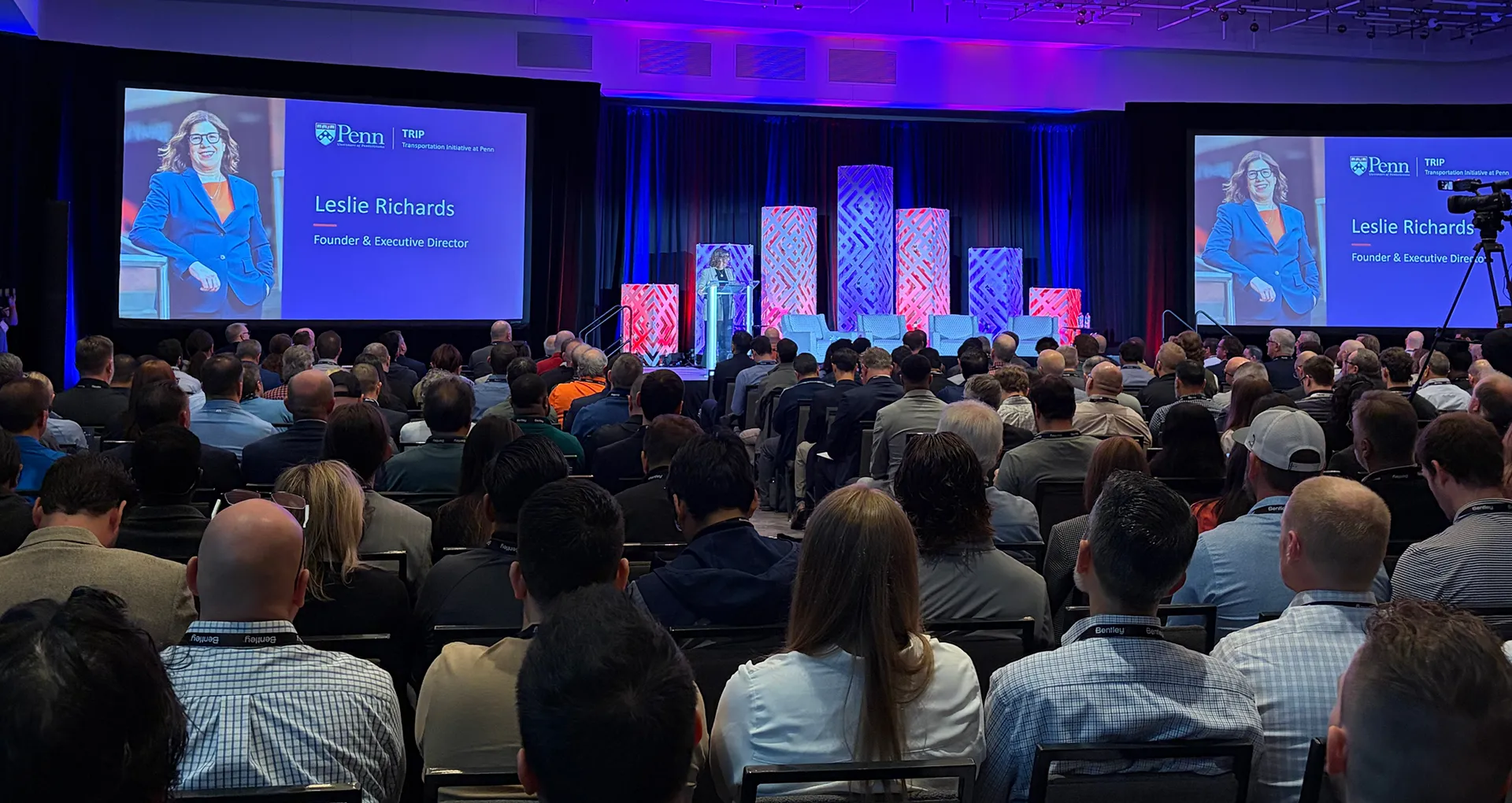
AI’s potential to change how the industry works drew hundreds of engineers, executives, contractors, and state officials to the Hilton Dallas Lincoln Centre in October for the two-day Illuminate 2026 Dallas, the latest stop in Bentley Systems’ global conference series. The theme was Infrastructure Reimagined, and judging by the energy in room, attendees were keen to swap stories, share ideas, and get to work.
“The only way we’re going to be able to progress at the pace of change that we’re dealing with today is really by sharing and collaborating,” said Andy Rahden, Bentley’s chief revenue officer. Many organizations want to explore AI but don’t know where to begin, he said. “The worst thing that you can do is not get started.”
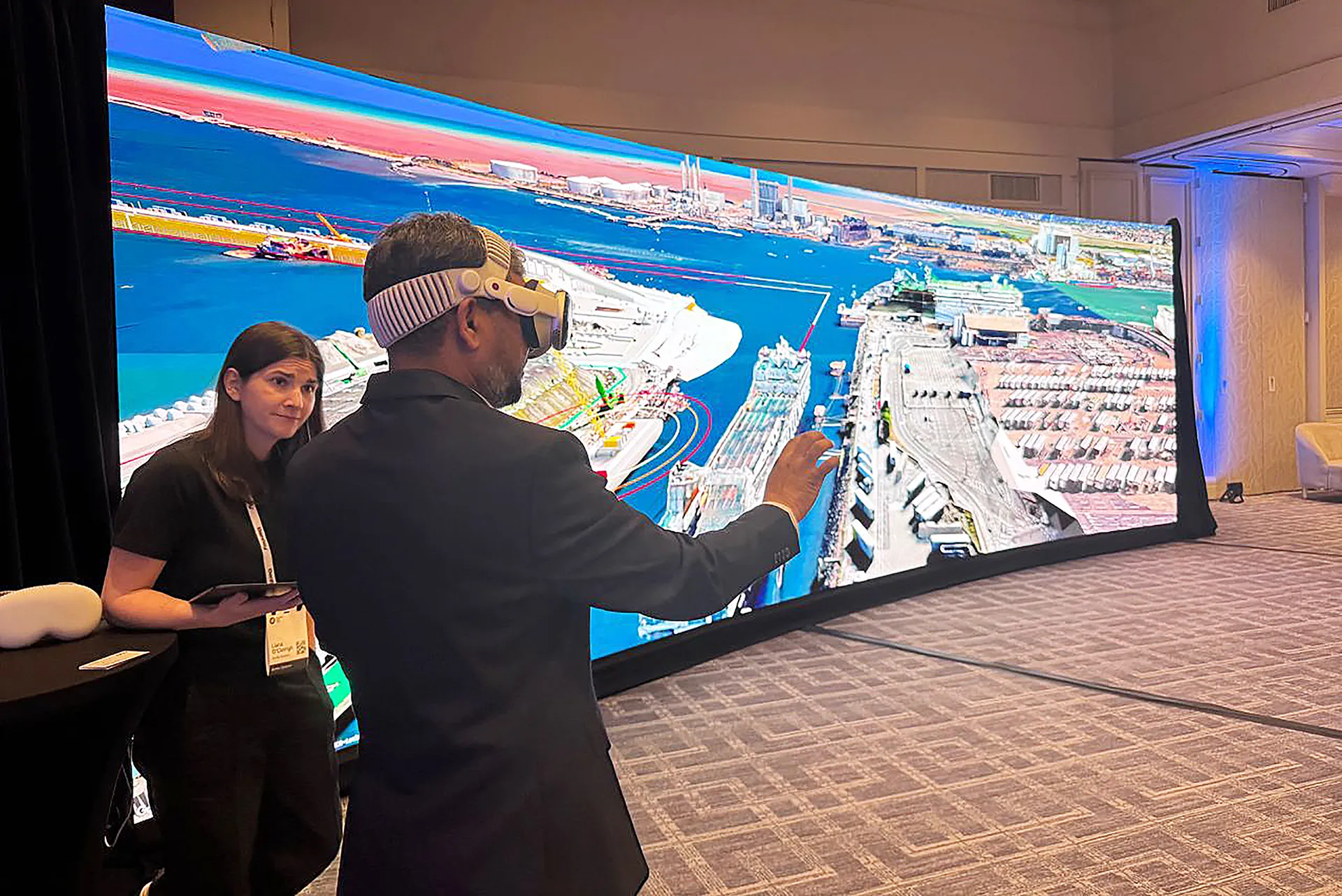
The first day set the agenda with executive keynotes on where AI is taking the infrastructure sector, along with a panel of public agency leaders discussing the AI readiness of their organizations. Firms and engineers also presented case studies of their highway, water, and flood-protection projects. Day two was more technical, with sessions focusing on transportation, water, energy, and cities. Attendees also tried Bentley’s newest tools alongside the software engineers who built them. “It’s really kind of immersive,” said Clinton Anyiam, a transportation engineer at Woolpert. “A lot of creativity and a lot of hands-on things.”
Weeks to hours
Volaree Rendon, Bentley’s director of solution engineering, described how she uses AI to manage spreadsheets and handle repetitive calculations, relatively mundane tasks that in the recent past consumed a lot of her time. “What used to take me a week, maybe two weeks … has been reduced down to, I’m not even kidding, like hours, if that; sometimes minutes,” she said. “It’s mind blowing.”
Matt Sheridan, Bentley’s senior director of solution engineering for the Americas, showed how fast the underlying models improve. Six months ago, his team used Bentley’s STAAD and MicroStation applications with AI to build a model of London’s Gherkin tower, exterior only. More recently, when fed photographs of the interior, the AI system “was able to create the model and the exterior faster than before, but also generate the interior of it as well,” he said. “That’s only been a six-month timeframe.”
In Portland, Oregon, MWH Constructors is building the pipelines for the Bull Run filtration project to deliver drinking water to nearly a million people by 2027. Muru Subbu, a senior engineer at MWH, said the firm now queries its project data with AI. “You can ask any random questions, and it goes through all the data and extracts information,” he said. “It was really, really good.”
Enthusiasm with caveats
The enthusiasm came with caveats. Natalia Belkova, a highway engineer at Greenman-Pedersen, presented a roundabout redesign for a high-crash intersection in Delaware. Her firm uses AI for software training and to cross-check schedules assembled by hand against models. She said that on complex stormwater calculations, AI sometimes invented answers that don’t exist. “I was glad that I was able to share my perspective from the engineering standpoint, the actual person who uses it every day,” she said.
Joey Coco knows there’s zero room for error in engineering. His firm, Forte & Tablada of Baton Rouge, Louisiana, helped the state’s flood protection authority build a digital twin of the 17th Street Canal Pump Station, a linchpin of the 130-mile flood wall that has protected New Orleans since Hurricane Katrina. Coco, who also leads the consultancy Digi-Twin Global, has scanned every document his firm has produced since 1961 and loaded each into databases AI can search. But he also launched an internal course this year on how AI works, so his engineers understand how AI arrives at the answers. “You can have a response from AI that’s beautifully wrong,” he said. “The judgment part of our business is going to become very important.”
Ciara Doyle, a project engineer at LTRA, came to Dallas to see how AI fits real projects. Her takeaway: “It’s here.” Her condition: “Trust but verify.”
Sophia Mohr, chief innovation and technology officer at the Central Ohio Transit Authority, put the organizational question plainly during the opening panel: “It’s really easy to talk about the technology with AI, but there’s a whole other aspect: Is the organization ready?”
Building without code
Greg Demchak, Bentley’s vice president of emerging technology who also leads Bentley Labs, offered a glimpse of where AI may take the field. His team brought to Dallas an interactive demo that maps all 36 finalist projects from Bentley’s Year in Infrastructure Awards and displays them in 3D. Bentley Labs built the experience entirely with AI coding assistants. “We didn’t write a single line of code,” he said. “The hard work is actually having a great idea.”
Nathan Marsh, Bentley’s senior vice president and regional executive for Europe, the Middle East, and Africa, said users and other stakeholders are facing the same hard problems on both sides of the Atlantic: data sovereignty, provenance, and trust. “It’s already an essential assistant,” he said of AI, “but it will only ever be an assistant.”
The next stop on the conference series is the Bentley Tech Summit in Toronto, taking place April 13–15, 2027, where users will lead most of the sessions. Marsh calls it “the Everest of our events so far.”