

AUG 31, 2026
Design for understanding: Why visualization should start at the beginning of every infrastructure project
How continuous infrastructure visualization helps project teams improve understanding, collaborate earlier, evaluate choices more clearly, and build design confidence before changes become costly.
By Mike Williams, Senior Product Marketing Manager
Key Takeaways
- Early, continuous visualization helps infrastructure teams build shared understanding while design decisions are still flexible.
- The traditional "big reveal" surfaces issues too late, increasing the risk of rework, misalignment, and avoidable cost.
- Seeing downstream effects earlier helps teams evaluate tradeoffs across engineering, utilities, permitting, and construction phasing.
- A living visual experience connected to current engineering data turns iteration into faster, more informed collaboration.
- iTwin Engage supports this shift by helping teams create a shared understanding of evolving designs before construction begins.
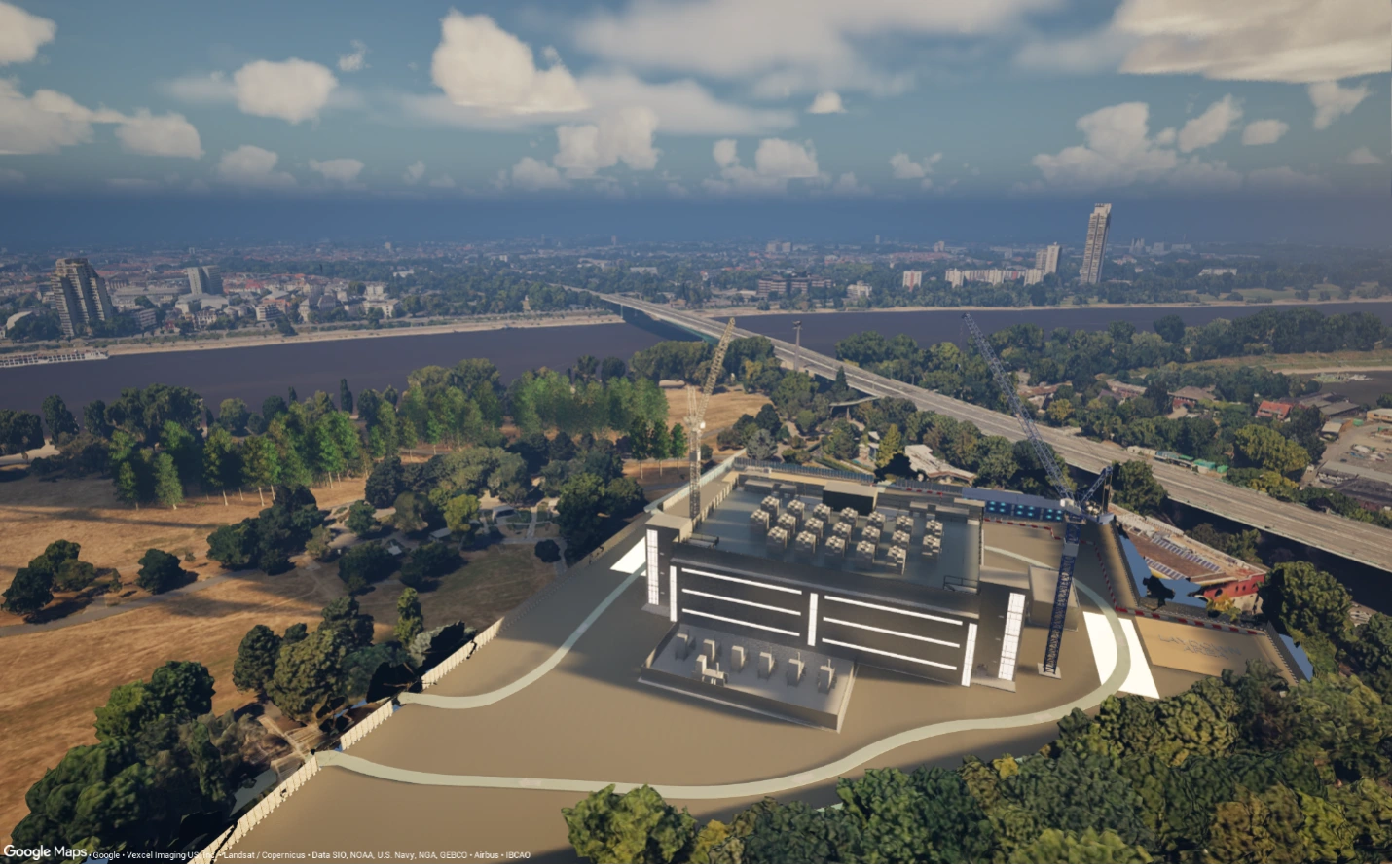 Great infrastructure is not simply the result of better engineering; it is the result of ensuring everyone understands the design while there is still time to improve it.
The success of any infrastructure project hinges on confident, well-informed decisions. These rely in turning complex, connected project data into a clear, shared vision that everyone can understand. But that work delivers its greatest value not in the final moments before approval, but while ideas are still taking shape and choices remain fluid.
Visualization creates the most value when it begins early and stays connected to design changes, helping teams evaluate tradeoffs, align stakeholders, and reduce costly rework before decisions harden.
Beyond the final render: why late-stage visualization falls short
For decades, the rhythm of infrastructure design has been defined by a series of formal, high-stakes presentations. After weeks of focused work, engineering teams unveil the latest design iteration to stakeholders in a “big reveal.” This traditional review process treats design as a linear sequence—design, then present, then approve.
But design is not linear. It is an iterative loop of proposing, testing, and refining. The big reveal model places the burden of understanding at the very end of the cycle, when teams have the least freedom to act on new insights. Research from the Construction Industry Institute has consistently shown that rework, often stemming from design errors and miscommunication, can account for up to 10% of a project's total cost. These are not just engineering failures; they are failures of shared understanding.
The ripple effect of downstream consequences
Every design decision, no matter how small, creates a ripple of downstream consequences. A seemingly simple change to a highway’s vertical alignment, for instance, does not just alter the road itself. It impacts drainage patterns, requires new utility relocations, changes environmental permitting requirements, and alters construction phasing. Each of these consequences carries its own cost, schedule, and risk. The earlier these ripple effects can be seen and understood by the entire project team, the more freedom they have to make better, more holistic decisions.
From static snapshots to continuous collaboration
To build the confidence needed for today’s complex projects, this outdated model must be inverted. The industry’s most innovative firms are moving away from static visualizations to a living infrastructure visualization experience that remains synchronized with evolving engineering data.
Traditional visualization workflows rely on exporting models into separate rendering environments. The result is a beautiful but static snapshot that becomes obsolete the moment the engineering model changes. The new approach eliminates this disconnect. Visualization becomes a living extension of the engineering process itself, evolving alongside the design rather than simply documenting it after the fact. This shift—from static snapshots to living conversations—is the key to building true design confidence.
Building design confidence through shared understanding
Design confidence comes from the shared certainty among all stakeholders that the project is on the right path. It is built incrementally, through a process of continuous exploration and validation.
- Evaluating alternatives and their consequences: Instead of comparing two bridge designs on a slide, an owner can now experience them immersively. They can “drive” the approach and see how each option affects views and integrates with the landscape, allowing them to choose a path forward with full confidence in the decision.
- Driving iteration and design validation: A team modifies a rail alignment. Instantly, the entire project team and the client can see the impact. This rapid, visual feedback loop builds confidence that the design not only meets technical specifications but also achieves broader project goals, turning a week-long iteration cycle into a minutes-long conversation.
- Fostering true multidisciplinary collaboration: Architects, civil engineers, and construction planners can explore a federated digital twin together in real time. When visualization is a shared, living process, collaboration becomes proactive, not reactive. A McKinsey Global Institute study on construction productivity found that enhanced digital collaboration can reduce project schedules by up to 20%, highlighting the value of resolving issues earlier through improved collaboration and shared understanding.
A new standard for design confidence
In modern infrastructure, the final design is not a singular creation, but the product of countless conversations and incremental decisions. The quality of that design is a direct reflection of the extent of understanding that was achieved at every step along the way.
By embracing a model of continuous visual conversation, organizations are doing more than just reducing costly rework. They are building the design confidence needed to deliver better, more resilient, and more valuable infrastructure. The future will belong not to the organizations that design the fastest, but to those who ensure their projects are understood the soonest.
Learn how your organization can move beyond the traditional "big reveal" and build a culture of continuous infrastructure visualization. Discover how iTwin Engage infrastructure visualization software helps teams transform evolving engineering data into a living, shared experience. Build design confidence, accelerate stakeholder alignment, and ensure your best projects are the ones everyone understands earlier in the process, long before construction begins.