Home / Upcoming

Geotecnia Aplicada à Mineração: Análise de Barragens de Rejeitos, Pilhas e Cavas com PLAXIS eGeoStudio

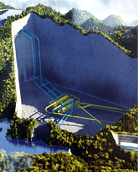
Geotecnia aplicada à mineração: análise de barragens de rejeitos, pilhas e cavas com PLAXIS e GeoStudio Registre-se agora Nesta série de webinars, exploramos como o PLAXIS e o GeoStudio ajudam profissionais da mineração a tomar decisões mais seguras e eficientes por meio da modelagem geotécnica avançada. Cada sessão aborda aplicações práticas como estabilidade de barragens de rejeitos, taludes de cavas e comportamento de pilhas de estéril. Engenheiros, consultores e planejadores de mina aprenderão com especialistas do setor por meio de estudos de caso, fluxos de trabalho e boas práticas. A série oferece uma base sólida para integrar essas ferramentas às operações diárias, aprimorando o gerenciamento de riscos e o desempenho da infraestrutura geotécnica. Parte 1: Análise com PLAXIS 2D para descomissionamento seguro de barragens de rejeitos disponível sob demanda O descomissionamento de barragens de rejeitos representa uma etapa crítica no ciclo de vida de uma mina, demandando planejamento geotécnico rigoroso para assegurar tanto a segurança a longo prazo quanto a proteção ambiental. Nesta sessão, será demonstrado como o PLAXIS 2D pode ser aplicado na avaliação do potencial de liquefação estática em barragens de rejeitos durante o processo de desconfinamento. Você irá aprender sobre: Parametrização de modelos constitutivos e a aplicação

Read More >

Your Guide for Deep Foundation Design and Analysis with PLAXIS 3D

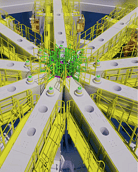
Your Guide for Deep Foundation Design and Analysis with PLAXIS 3D With Your Registration, you will get access to PLAXIS Project Files and a step-by-step workflow. Geotechnical engineers face complex challenges when designing foundations—from modeling soil-structure interaction and calibrating with in-situ tests to calculating subgrade modulus and navigating heterogeneous ground conditions. Achieving optimal performance is essential for controlling settlements, minimizing differential movement, reducing reinforcement, and lowering costs. A powerful Finite Element Analysis (FEA) tool is essential. PLAXIS enables engineers to: Simulate real soil behavior with confidence Integrate field data for reliable calibration Model complex structural interactions Balance safety, performance, and cost Discover how PLAXIS transforms geotechnical complexity into clarity—empowering confident decisions and delivering robust, cost-effective designs. Part One: Efficient Deep Foundation Modelling with PLAXIS 3D Available On Demand Deep foundations play a critical role in geotechnical engineering, where professionals regularly encounter complex challenges—ranging from aligning design with in-situ test data, to accurately modelling soil-structure interaction and interpreting heterogeneous subsurface conditions.​​This webinar explores how PLAXIS empowers geotechnical, structural, and soil improvement specialists to overcome these challenges. PLAXIS offers powerful possibilities such as advanced calibration with in-situ data, robust modelling of soil-structure interaction, and modelling of soil improvement and deep foundation systems

Read More >

An Intelligent Approach to Tower Analysis and Design with OpenTower Designer 2025 EMEA

An intelligent approach to Tower Analysis and Design with OpenTower Designer 2025 EMEA Register Now Available On Demand Unlock faster, more efficient workflows for telecom tower modeling, analysis, and structural design using OpenTower Designer. In this webinar, you’ll explore the latest features, learn how to transition from legacy software like MSTower, and discover how to create, analyze, and optimize towers with modern code compliance.  This webinar is perfect for engineering professionals in telecom, infrastructure, and design firms across Europe, Middle East and North Africa who want to reduce rework, improve compliance, and accelerate tower development. What you will learn: ​ OpenTower Designer overview and key workflows Import, analyze, and update existing legacy MSTower projects Building a guyed tower using the new design wizard New for 2025: Modal analysis and code updates​​ Tips for spreadsheet and OpenTower iQ integration Whether you’re a long-time engineer or exploring OpenTower Designer for the first time, this webinar will equip you with practical techniques to maximize accuracy, streamline workflows, and get the most from your tower design process. Meet the Presenters Jose A.J. Capilla, PhD Product Engineer, OpenTower Designer & OpenTower iQ Bentley Systems Jose is a structural engineer with ten years of experience in

Read More >

Safe & Reliable Deep Foundation Design with Trusted Geotechnical Analysis

Safe & Reliable Deep Foundation Design with Trusted Geotechnical Analysis ​ Over the years, the construction industry has never ceased to amaze us with the awe-inspiring high-rise buildings that break records with their towering heights. The marvels of modern engineering that we see today owe much to the intricate and robust deep foundation systems that support them. These foundation systems play a crucial role in underpinning the superstructures atop, ensuring their stability and safety. ​ It’s therefore imperative to enhance our understanding of the soil-structure interaction behaviors underground, and that’s when this webinar series come in to address the various modelling aspects and design concerns using the trusted geotechnical FEM solution, PLAXIS. Episode 1: 2D/3D Modelling Approaches for Deep Foundations Available On Demand While a 3D solution fully honors the three-dimensional reality of real-world problems, the computational effort required to analyze the same problem is usually greater compared to using a 2D solution, assuming the problem fits the 2D model assumptions. In the first installment, we will explore the piles groups sizes for which a 2D solution would remain suitable in predicting the interaction effects among the raft, piles, and soil with reasonable resolution, by comparing the results to those

Read More >

From Sections to Surfaces: 3D Geological Modelling for PLAXIS 2D Users

From Sections to Surfaces: 3D Geological Modelling for PLAXIS 2D Users See how 3D geological modelling drives better geotechnical outcomes Register Now Most PLAXIS 2D users rely on borehole logs, CAD tools, or 2D cross sections to interpret subsurface conditions. But when ground conditions become complex, 2D assumptions often lead to uncertainty and missed risks. This three-part webinar series introduces Leapfrog Works, a powerful 3D geological modeling tool that enhances your PLAXIS 2D workflow. By visualizing and refining geology in 3D before analysis, you gain clearer insights, reduce interpretation errors, and improve the reliability of your geotechnical models. Through real-world projects, live demos, and step-by-step workflows, discover how Leapfrog Works helps PLAXIS 2D users make smarter design decisions with confidence. Part One: An integrated design workflow for Porto Metro 3.0 Expansion using Leapfrog Works and PLAXIS Wednesday, September 17, 202510:00 AM Central European Summer Time Still relying on CAD-based interpretations or static 2D sections in your geotechnical analysis? This session shows why that’s no longer enough. Discover how Leapfrog Works enables geotechnical engineers to visualize the ground in 3D, reduce uncertainty, and strengthen their analysis with data-driven subsurface models. We’ll explore a real-world case study from AYESA—a global leader in

Read More >

Transforming Infrastructure CAD with AI-Driven Workflows

Transforming Infrastructure CAD with AI-Driven Workflows MicroStation 2025 is reshaping infrastructure CAD through AI, automation, geospatial intelligence, and digital twin integration. ​ ​Join us for a two-part webinar series showcasing how MicroStation 2025 is transforming infrastructure design with the power of AI, automation, and digital twins.​ ​Discover how to: Speed up your workflows with AI-powered design tools Automate and customise using the new Python Assistant Enhance context with Google Maps and Cesium 3D Tiles Work smarter with improved geospatial and ESRI integration​ Connect directly to iTwins to future-proof your projects From transport to utilities to buildings, if you are designing infrastructure of any kind this is your chance to level up your CAD game. Episode 1: AI, Automation, and Beyond: MicroStation 2025 for Smarter Infrastructure Available On Demand Ready to take your infrastructure design to the next level? ​ Join us to explore how MicroStation 2025 is transforming CAD with powerful new AI tools, automation, and geospatial intelligence built to streamline workflows and unlock smarter, more connected infrastructure projects.​ ​What you will learn: Use AI-powered automation and the new Python Assistant to simplify and customise design workflows​ Bring your designs to life with Google 2D Maps and Cesium 3D Tiles

Read More >

An Intelligent Approach to Tower Analysis and Design with OpenTower Designer 2025 SEA

An intelligent approach to Tower Analysis and Design with OpenTower Designer 2025 SEA Register Now Available On Demand Unlock faster, more efficient workflows for telecom tower modeling, analysis, and structural design using OpenTower Designer. In this webinar, you’ll explore the latest features, learn how to transition from legacy software like MSTower, and discover how to create, analyze, and optimize towers with modern code compliance.  This webinar is perfect for engineering professionals in telecom, infrastructure, and design firms across Southeast Asia who want to reduce rework, improve compliance, and accelerate tower development. What you will learn: ​ OpenTower Designer overview and key workflows Import, analyze, and update existing legacy MSTower projects Building a guyed tower using the new design wizard New for 2025: Modal analysis and code updates​​ Tips for spreadsheet and OpenTower iQ integration Whether you’re a long-time engineer or exploring OpenTower Designer for the first time, this webinar will equip you with practical techniques to maximize accuracy, streamline workflows, and get the most from your tower design process. Meet the Presenters Swarup Mondal Sr. Manager, Business Development (Structural, Civil & Mobility Solutions), Bentley Systems​, Inc. Swarup is a civil engineer with more than 20 years of experience in AEC

Read More >

Design Beyond Limits: The Structural Advantage Series​

Design Beyond Limits: The Structural Advantage Series​ Smarter Structures, Stronger Outcomes Explore cutting-edge structural engineering solutions in the Design Beyond Limits webinar series – designed for engineers and consultants tackling complex mining, energy, and infrastructure projects across ANZ. With USD 75 billion in investments forecasted for 2025, firms must design faster, smarter, and more sustainably.​ Learn how STAAD, RAM, and ADINA streamline workflows, ensure AS code compliance, and improve productivity across the structural lifecycle. Discover real-world use cases showing how small to mid-sized consultancies can reduce rework, enhance design accuracy, and improve collaboration using Bentley’s Structural WorkSuite.​ If you’re ready to push boundaries and deliver confidently, this series equips you with the tools to design beyond limits. Episode 1: Structural Solutions for the Mining Industry with STAAD, RAM, and ADINA Available On Demand Join us for an exclusive webinar showcasing the power of STAAD for industrial and mining structures. Widely used across mining, civil, utility, and industrial sectors, STAAD is a go-to solution for structural engineers. In this session, we’ll explore how STAAD’s implementation of AS 4100 empowers steel structure design in mining applications — and go even further with advanced simulation using ADINA. What you will learn: Real-world STAAD.Pro

Read More >

Critical Piping Lifecycle Insight with Fatigue Analysis in AutoPIPE Advanced

Critical Piping Lifecycle Insight with Fatigue Analysis in AutoPIPE Advanced Register Now Wednesday, August 20, 2025 | 1 PM Eastern Time Zone (EDT) Insight into project life spans is fundamental to the success of your piping project. Fatigue analysis is a special type of damage that can occur on a piping system that can restrict the life of the plant. With AutoPIPE Advanced, we now have a straightforward approach to addressing the transience that occurs during a plant’s life.​ With fatigue curves of multiple design codes included, this fatigue analysis is comprehensive enough to address piping systems from all over the world, completely customizable to your needs, whether your system goes through one cycle or billions. Codes B31.1, B31.3, ASME Section VIII, and ISO 14692 are included to ensure your projects are compliant.​ Fatigue is a critical factor in piping system design, often limiting plant lifespan due to cyclic loading. AutoPIPE Advanced offers a streamlined, code-compliant approach to fatigue analysis—covering both high- and low-cycle scenarios with global design codes and customizable fatigue curves.​ Join Bentley pipe stress expert Joshua Taylor to see how AutoPIPE Advanced can help you optimize system reliability, reduce maintenance costs, and extend the life of your

Read More >

Geotecnia Aplicada a la Minería: Tailings Dams y Open Pit con PLAXIS y GeoStudio en Operaciones Mineras

Geotecnia Aplicada a la Minería: Tailings Dams y Open Pit con PLAXIS y GeoStudio en Operaciones Mineras Regístrate ahora Tecnología aplicada al diseño, análisis y monitoreo geotécnico en relaves y minería a cielo abierto Esta serie de seminarios web está diseñada para profesionales geotécnicos de la industria minera que buscan optimizar el análisis y diseño de presas de relaves y minería a cielo abierto mediante herramientas avanzadas como PLAXIS, GeoStudio y Leapfrog Geo. A través de estudios de caso reales y flujos de trabajo integrados, exploraremos cómo estas soluciones ayudan a enfrentar desafíos clave en las operaciones mineras, incluyendo: Estabilidad de taludes y control de infiltraciones en relaves y minas a cielo abierto. Modelado numérico avanzado utilizando métodos LEM y FEM. Integración de datos geotécnicos y geológicos para una toma de decisiones más precisa. Dirigida a ingenieros civiles, ingenieros geotécnicos y geólogos con experiencia en proyectos mineros en América Latina, esta serie tiene como objetivo demostrar cómo la tecnología de Seequent/Bentley puede transformar la eficiencia, seguridad y sostenibilidad de las operaciones mineras modernas. Parte 1: PLAXIS en Minería: Infiltraciones y Estabilidad de Relaves Disponible a pedido Este seminario técnico está dirigido a profesionales geotécnicos y mineros interesados en el análisis

Read More >

Digitally Reimagine Land & Urban mapping Projects: Unified Geospatial Workflows for planning design & Delivery with MicroStation

Digitally Reimagine Land & Urban mapping Projects: Unified Geospatial Workflows for planning design & Delivery with MicroStation Unify survey, GIS, and design data to accelerate planning, boost accuracy, and deliver context-rich geospatial models This series explores practical approaches to improve geospatial workflows for land and urban mapping. Each session focuses on how MicroStation helps integrate survey, GIS, and CAD data, streamline collaboration, and meet the accuracy and compliance demands of large-scale geospatial projects. You will experience how you can focus on solving common challenges: fragmented systems, lack of visual context, disconnected GIS/CAD data, and inefficient collaboration. Episode 1: Integrate Multiformat GIS Data: Unify Survey, CAD, and GIS Workflows Available On Demand Disconnected systems and redundant processes slow down project momentum and increase the risk of costly misalignments. It’s more important now than ever to stay on top of your projects to avoid these issues. In this session, explore how an integrated approach to geospatial data can eliminate workflow silos, reduce rework, and ensure consistency across large-scale geospatial and land development projects. You’ll see the various GIS data that can improve project coordination and accelerates early-stage planning. Learn how unified workflows lay the groundwork for scalable collaboration and long-term data reliability.

Read More >

Boost Efficiency and Compliance for Electric Power Structural Design

Boost Efficiency and Compliance for Electric Power Structural Design Register now Designing substations and transmission structures today requires more than traditional tools—especially with evolving wind and seismic code requirements. This 3-part webinar series explores how STAAD, STAAD Foundation Advanced, and STAAD-ADINA enable structural engineers to deliver resilient, code-compliant designs with greater speed and accuracy. Learn how to streamline steel and foundation workflows, reduce rework through integration, and apply advanced simulation techniques for critical assets. Whether you’re expanding infrastructure, retrofitting existing systems, or managing complex environmental loads, this series equips your team with practical strategies to improve design efficiency, ensure compliance, and confidently tackle the structural challenges of modern grid infrastructure. Part One: Boost Efficiency and Compliance of Structural Steel Design for Substations and Transmission Structures with STAAD Available On-Demand As power demand increases and infrastructure ages, the need to maintain, expand, and fortify substation structures and the broader electrical power grid has never been more critical. This webinar will explore how STAAD.Pro can support engineers in delivering reliable, code-compliant designs that meet today’s operational challenges and tomorrow’s energy demands.. ​ ​What you will learn: ​ How to assess and strengthen existing substation structures using STAAD.Pro​ Best practices for integrating new

Read More >

Sustainable Sewer-Storm Management for India’s Urban Future

Sustainable Sewer-Storm Management for India’s Urban future Leveraging Flow Monitoring, Model Calibration, and Spatial Analysis to Drive Sustainable Sewer and Storm Infrastructure Strategies with OpenFlows Sewer and Storm India’s urban infrastructure is under growing pressure from rapid population growth, aging sewerage systems, unplanned urban sprawl, and climate change. Challenges like urban flooding, hydraulic overloading, and untreated wastewater require a shift to predictive, data-driven planning. ​ This two-part technical webinar series explores how Bentley’s OpenFlows Sewer and Storm solutions support advanced hydraulic-hydrologic modeling, capacity assessment, infiltration/inflow analysis, and rehabilitation planning. ​ Learn how to enhance urban sanitation and flood resilience through smarter asset management and compliance with national programs such as AMRUT 2.0, Swachh Bharat Mission – Urban 2.0, National Mission for Clean Ganga, and the Smart Cities Mission. Episode #1 – Smart Sewers for Smart Cities: Modernizing Urban Sanitation System (Rehabilitation of Sewer Networks)​Episode #2 – Concept to Action: Building Flood Resilient Cities with 1D-2D Modeling Episode 1: Smart Sewers for Smart Cities: Modernizing Urban Sanitation System (Rehabilitation of Sewer Networks) Available On Demand This session focuses on the modernization of India’s aging sewer infrastructure. Participants will learn how OpenFlows Sewer enables data-driven rehabilitation, improves service delivery, and supports the

Read More >

PLAXIS in Practice: Expert Guidance on Retaining Walls and Groundwater Analysis​

PLAXIS in Practice: Expert’s Guide on Retaining Walls and Groundwater Analysis Register Now Join our upcoming live series, “Designing Retaining Walls in PLAXIS,“ and “Designing with Groundwater in PLAXIS” to discuss practical tips and key lessons. In this series, we will learn practical tips and key lessons from Sergei Terzaghi on designing retaining walls and groundwater simulation in PLAXIS. Sergei has over 39 years of Geotechnical Engineering experience throughout the Pacific Basin, the America’s and elsewhere across a wide range of soil conditions and project types. We will discuss: ​ The challenges posed by the two different approaches; conventional stability-based approach used in design codes compared to the stress equilibrium-based approach in PLAXIS​ Common issues in design, setting up the model, and analysis​ The Importance of groundwater analysis in your PLAXIS model​ The impact of the different types of groundwater analysis with a focus on the transient flow in particular​ Practical considerations and tips for groundwater analysis Part One: Designing Retaining Walls in PLAXIS Available On-Demand 11:00 AM AEST In this talk, we will discuss designing retaining walls in PLAXIS, focusing on the challenges posed by the two very different methodologies, i.e., conventional stability-based approach used in design codes compared

Read More >

Machine Foundation Design Essentials: Modal, Harmonic & Seismic Analysis in Practice

Machine Foundation Design Essentials: Modal, Harmonic & Seismic Analysis in Practice Register Now Available On-Demand Machine foundations generally require consideration of static, dynamic, and seismic loads. Dynamic loads from machine operation are generally small but are applied repetitively over long periods of time. The natural frequency of the machine, foundation, and soil system needs to avoid resonance with the operating frequency. This is one of the most challenging tasks for structural engineers. Join us for this exclusive session, tailored for structural engineers and professionals who want to deepen their understanding of structural dynamics and enhance their practical skills in analysing complex foundation systems under dynamic loads using STAAD. Whether you’re designing for high-speed rotating machinery or dealing with challenging soil-structure interaction, this session will guide you from theoretical basics to hands-on modelling and analysis. What you will learn: Fundamentals of dynamic loading on machine foundations How to model and simulate real-world vibration scenarios Performing modal, harmonic, seismic and time-history analyses in STAAD.Pro Understanding soil-structure interaction and spring supports Common mistakes and how to avoid themLive walkthrough of a real-world case study Meet the Presenters Caglar Cubukcu​ Product Sales Engineer EMEA​[email protected] Caglar is a product sales engineer. He holds a Bsc.

Read More >

Optimizing Support of Excavation Design with PLAXIS: Practical Finite Element Modeling

Optimizing Support of Excavation Design with PLAXIS Practical Finite Element Modeling With your registration, you will get access to PLAXIS project files and a step-by-step workflow. If you work on deep excavations in urban or infrastructure settings, you know how quickly complexity builds – slurry walls, groundwater control, nearby structures, seismic demands.​ This series is for professionals like you who need to model these conditions with precision, not assumptions.​ We’ll walk through real-world workflows in PLAXIS—covering everything from retaining wall systems and dewatering to dynamic analysis and soil-structure interaction. You’ll also get access to downloadable project files and modeling summaries so you can apply what you see.​ Whether you’re already using PLAXIS or looking for a better way to handle challenging ground conditions, this is practical, technical content designed for your day-to-day work. Part One: Estimating and Minimizing Movements using PLAXIS 2D: Haley & Aldrich Case Study on Slurry and Secant Pile Wall Design Available On Demand The Tangent and Secant pile systems are commonly used in geotechnical engineering to support excavations. However, the design process can be complex, often leading to the adoption of overly conservative analyses, which in turn increases cost.​ PLAXIS, a powerful tool for a wide

Read More >

Featured Software

MicroStation

MicroStation Software Logo White

MicroStation

Model, document, access, and view architectural, engineering, mapping, construction, and operations design information with the power and flexibility you need for any size project.

ProjectWise

ProjectWise Software Logo White

ProjectWise

Leverage digital design delivery, portfolio intelligence, data governance, and enhanced engineering work-in-progress capabilities to improve project performance and productivity with ProjectWise, powered by iTwin.

SYNCHRO 4D

SYNCHRO Software Logo White

SYNCHRO 4D

Manage your projects efficiently with virtual construction, planning, and model-based workflows, field to office.

OpenFlows
WaterGEMS

OpenFlows Software Logo White

OpenFlows
WaterGEMS

Comprehensive decision-support software for you to design, plan, and operate your water distribution systems.

Digital Twins

iTwin Software Logo White

Digital Twins

Take a look at what Digital Twins are, how they benefit you, and how it all works!

OpenRoads Designer

OpenRoads Software Logo White

OpenRoads Designer

Comprehensive detailed design and documentation for roadway projects including surveying, drainage, subsurface utilities, and visualization in on application.

STAAD

STAAD Software Logo White

STAAD

Analyze and design any structure, simple or complex, and share the synchronized model with confidence for multidiscipline team collaboration.

PLAXIS 3D

PLAXIS Software Logo White

PLAXIS 3D

Perform powerful 3D finite element analysis of deformation and stability for high-profile projects in soil and rock.

20% Off Bentley Software

Deal Ends Friday

Use Coupon Code "THANKS24"